JULY 19, 2026 – Often someone will ask if I’ve listened to Ezra Klein’s latest interview with so-and-so about such-and-such. And nearly as often, I’ll answer with the same shame-tinged reticence that a lazy student answers the teacher’s question, “Did you finish today’s assignment?” Seriously, I need to eschew all other consumption of information about current events—beyond a quick review of headlines to ensure that the world hasn’t ended quite yet—and listen to Mr. Klein’s informed and informative sessions with his fascinating guests.
The latest one I caught was with the Hon. Kevin Rudd, former prime minister of Australia, best known, perhaps, for spearheading Parliament’s Apology to Aboriginal Peoples—especially the “Stolen Generations” (think native children in boarding schools in Canada and the United States in the 20th century). What was remarkable about this retired Australian politician is that before and since his political career, he was and is, a world class Sinologist. In university he majored in modern Chinese history and became fluent in Mandarin. After school he joined the Australian diplomatic corps and landed a posting in Beijing. On a “field trip” half a century ago, he met Xi Jinping, who at the time was a provincial official and fast rising star in the Communist Party.
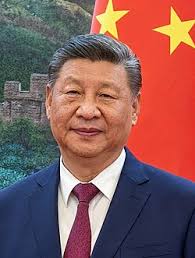
After retiring from politics at age 59 (though staying heavily engaged in academic settings and government commissions), the former Prime Minister went back to school—Oxford University, no less—to pursue a PhD in the Marxist ideology of Xi Jinping, now president of China. In this effort, Rudd read every single word ever published by Xi.
Upon hearing Ezra Klein’s summary of his guest’s credentials, I felt supremely fortunate to be admitted to his hour-and-40-minute-class on “What Xi Jinping wants for China.” Few Westerners are better qualified than Ruud to divine what lies ahead—at least according to the ruler of China.
Ruud makes the case that Xi is a committed Marxist-Leninist, with a Chinese nationalist twist. In other words, Xi subscribes to the doctrine that the great wheel of history turns inexorably to eventual global communism (dialectic materialism in Marxist jargon), but that by adopting a Leninist approach, the inexorable can be accelerated (historical dialecticism in Leninist jargon). Moreover, a unified China free from the threat of foreign interference, can prosper and enjoy global hegemony. Xi is as hard-headed, determined, and strategic as world leaders come. Even at 73, he is a force to be noticed both domestically and internationally.
What all this means from a practical standpoint is that Xi wants China to be the world’s primary industrial and technological powerhouse. Already, China has made major strides—leaps, really—in AI, chip technology, EVs, solar panels, aeronautical engineering and other industries. In his push to the left, Xi is insisting on government investment in industry on a scale never seen. To finance it, he is essentially forcing the Chinese people to tighten their belts and divert their savings from the private sector to government-directed initiatives, though at the same time, accommodations have already been made to prop up private real estate—where currently most Chinese have their savings—which is in danger of imploding. Hand-in-glove with economic sacrifices are surveillance-intensive technologies to root out dissent.
Xi’s organizing theory, according to Ruud, is that government support of cutting-edge technologies will give China an enormous advantage in global markets. This advantage will more than compensate for the required initial investments. Any attempt to counter this strategy by tariffs can be challenged effectively by leveraging China’s rare earth minerals.
Whether you believe in Marxism or Leninism is beside the point. Xi believes in them and is determined to impose iron-clad discipline on the Party to ensure no back-sliding occurs. The situation is reminiscent of religious zealotry. You can say one’s worship of [Whatever] is a bunch of poppycock, but we’ve all seen the power that religious zealots—no faith system seems wholly immune—wield over their disciples, including the ultimate compulsion of leading a bunch of Americans from California down to the jungle in Guyana to drink poisoned Kool-Aid. In both instances—the religious cult and Xi’s China—betting on rebellion is probably a losing wager.
It can also be argued that Marxism-Leninism is a failed ideology; that Xi’s return to Party discipline is misplaced, and all that China’s competitors need to do strategically is wait him out—wait for the large sucking sound produced by the Chinese economy faltering and Chinese citizenry revolting as China goes down the proverbial drain. But Ruud points back to Xi’s grip on Party discipline—and the requisite physical power to back it up. The most salient lesson Xi took from the unraveling of the Soviet Union was the failure of the military to step forward to prevent the dissembling of the country. Xi has worked over the PLA (“Peoples Liberation Army”) to ensure that the Party can rely on it at all times and in all circumstances.
Inevitably, the issue of Taiwan surfaced in the interview. Ruud laid down some of the likely scenarios if China moves against Taiwan—most likely on the assumption the U.S. would abandon its ally (see NATO). If China were to get its way in Taiwan, the East Rim of the Pacific would likely “go nuclear,” starting with Japan and Korea. Soon Iran’s cache of fissile material would seem rather quaint—for some time, now, mind you, North Korea has been where Iran wants to be in the future. In any event, Xi has made it clear that Taiwan must be incorporated into China by the centennial of Mao’s revolution: 2049, just 23 years from now.
So, what should American policy makers do in response to Xi Jinping’s long-range strategic plan? For starters, they need to devise an exit strategy for all the time-hogging, money-burning, resource-wasting, reputation-destroying “stupid stuff.” Once we’re clear of the nonsense, red meat issues, and red herrings, actual serious policy, domestic and foreign, can be “a thing” again. In such circumstances, what Ruud advises is adoption of a China policy called “strategic managed competition.” It’s too dangerous economically and militarily for either side—China or the U.S.—to attempt destruction of the other side. What’s needed is an acknowledgment of our rivalry but also intelligent management of what amounts to a combination chess game/trading bazaar, in which cooperation is fostered where possible and competition is simultaneously managed within recognized, mutually protective guardrails.
None of this will be smooth and easy over the next few decades, but what Ezra Klein’s interview of Kevin Ruud underscored in urgent terms is that more than ever, our leaders need to get serious about real issues, and quit making up issues such as . . . oh, let me think . . . voter fraud! And starting yesterday, we voters need to get serious about electing serious leaders.
Subscribe to this blog and received notifications of new posts by email.
© 2026 by Eric Nilsson
