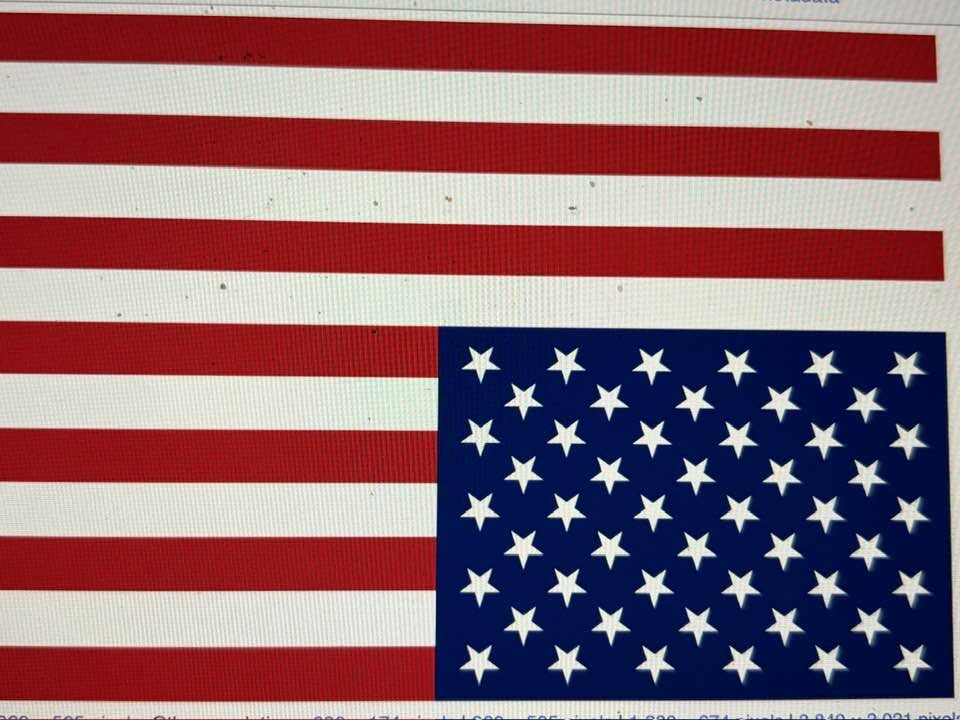
SEPTEMBER 1, 2026 – Invariably, our monthly book club meetings start not with the book of the month but with an in-depth discussion of politics. Our members are well informed; after all, every one of them is a reader. Given the nexus between politics and economics, naturally our exchanges over the former also involve the latter. At yesterday’s meeting the bond market—and its prospects—entered the conversation.
U.S. Treasurys became the focal point by way of our political speculations regarding the implications of Rule by Chaos and Capitulation—the Trumpian approach to governance, as sanctioned by the Republican controlled Congress and facilitated by the majority members of the Supreme Court. “I’m worried about what comes next,” said the head of our book club while we were still in a strictly political mode of discussion.
Another member answered that we’ve already passed the point of no return. I analogized to the classic scene in most Road Runner cartoons, wherein the eponymous character has outrun the edge of a cliff but has yet to experience the inevitable consequence of gravity. A third member of the book club then likened the Road Runner to the bond market—leading with U.S. sovereign debt. With that, off we went.
At present, it is impossible to measure the full effect of the chaos wrought since January 20, 2025. This conclusion reflects both the breadth and the depth of the disturbance. Thus far, however, the impact is dichotomous: many individuals feel the life-altering result directly—recipients on public benefits; farmers dependent on market stability and affordable fuel and fertilizer; scientific researchers dependent on grants from the federal government; the millions served by public and private organizations dependent on federal funding; members of the armed forces shipped off to the quicksand of the Middle East; the large segment of society living paycheck to paycheck and in constant “check” in the daily chess game of managing household food and gas costs; the unknown numbers of people caught by the claws of ICE and dispatched to places unknown. All of the foregoing folks have felt the pull of gravity—and the unforgiving valley floor below. Other members of society, however, remain in mid-air, not yet feeling the draw of gravity. Will some supernatural force—a blue wave in November perhaps?—save the day?
Still standing at the edge of the cliff, backs to the abyss, are the accomplices, apologists, enablers, minions and grifters, along with Christian zealots cheerfully hoisting placards reading, “DOWN WITH THE FALLEN!” And ensuring cross-group loyalty is the Mad King at the controls of a bulldozer with a broad blade in front and a swinging wrecking ball in back, engine growling, smoke and fumes spewing from the exhaust pipe. If history is a semi-reliable predictor, the scene will not end well for any of these mortals either—least of all, for the Mad King when he mistakes the gas pedal for the clutch and the dozer lurches forward, wrecking ball crashing through his empty soul.
Where was I? Oh yeah . . . the bond market . . . and on the edge of a precipice. The consensus that formed among my bookish guests (I played host, a duty associated with my book choice in the monthly rotation—Our Declaration by Danielle Allyn), was that our republic has already begun its slide. With successive downgrades of our debt, the cycle of debt-begetting-debt will accelerate. Interest rates will rise. On $40 trillion, the cost of runaway borrowing will by itself expand from nettlesome to inflationary to endangerment.
“But,” asked a member, “won’t the holders of all our debt be prisoners to it? If they sell, they’ll be shooting themselves in the financial foot.”
“Theoretically, yes,” I said, “and practically, yes, as well, except for the first bonds sold.” I then posited that U.S. debt holdings in a grizzly bear market are no different from blue-chip equities entering the same forest. I described an experiment I once learned about on PBS Frontline—conducted in a finance course at a B-school; a case in which students traded stock in an oil company in a perfect market (i.e. everyone had access to all relevant information (in the case study, the amount of oil in the ground; minute-by-minute knowledge of market price)). Even under “perfect” circumstances, nearly everyone went from boom to bust. Holders of debt face the same quandary. If the issuers of debt or equity crash, go haywire and bankrupt, the holders will go down too—not those who with a divining rod (or members of the Congress or the Trump family with insider information and thumbs to their noses by way of a corrupt DOJ), but everyone else who could well have seen things coming but out of fear or paralysis failed to move quickly enough.
Market crashes have occurred before. A crash in the U.S.-issued debt market—and by association—debt markets generally—is not beyond the realm of probability, any more than what on November 4, 2024 seemed far outside that realm but has since become our hard reality: the United States Government seized by champions of avarice, cruelty, rejection of allies, embrace of tyrants, contempt for the rule of law, and by extension of all the foregoing, active indifference to the long-term interests, welfare, prospects and aspirations of its citizenry. In such event—the crash of U.S. Treasurys—the global impact would be global depression; a complete meltdown of what’s left of the global order, yielding to an era of darkness and conflict, in which no one is immune or exempt.
Politics and economics eventually yielded to discussion of the book; of the Declaration of Independence; of the author’s thesis that the draftsmen (plural) of that great document placed equality ahead of freedom, and that freedom depends on equality. We observed that despite the contradiction between the case for equality and the reality of slavery in 1776, the Declaration provides today a time-honored template, a well-reasoned blueprint for when, why, and how tyranny is to be replaced. If nothing else, when applied to our current circumstances, the Declaration of Independence is a reminder that we humans, however we organize ourselves, can run, but we can’t hide, from . . . irony.
Subscribe to this blog and received notifications of new posts by email.
© 2026 by Eric Nilsson
