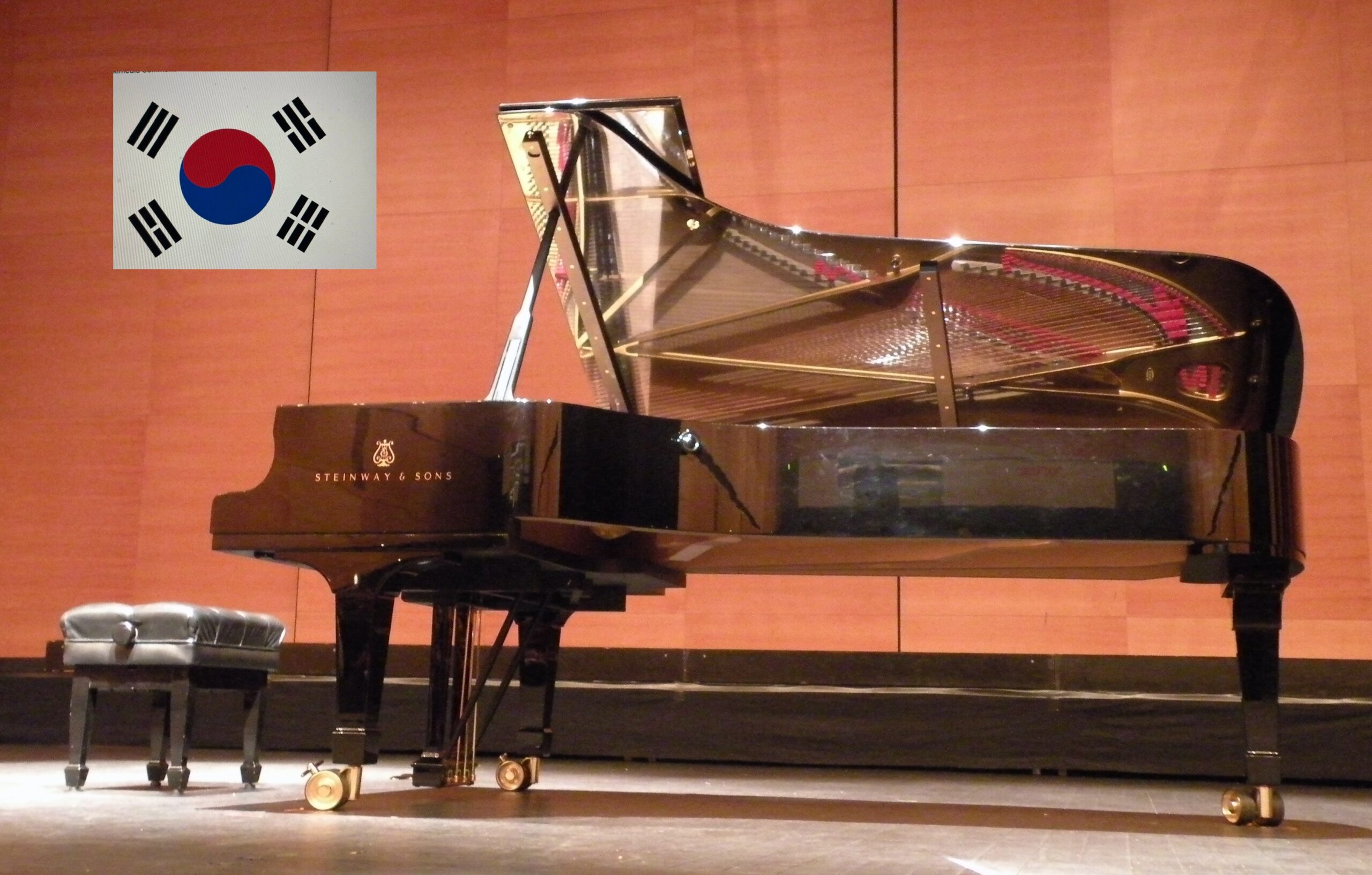
NOVEMBER 8, 2026 – (Cont.) To press home a key feature of modern Korean culture—the elevated stature of Western classical music—late yesterday evening I began watching another Korean Netflix series, Do You Like Brahms? in which one of the main characters is a young winner of the Chopin Competition (Warsaw – In reality, the most prestigious of piano competitions), another is a violin prodigy who studied at Juilliard, a key supporting character is a cellist, and another is a young violinmaker and repairer/restorer of stringed instruments. If the story line (so far) is several notches below the intensity of Four Hands . . ., it’s developing into a surprisingly captivating tale. I was quite amazed when one of the main the stars, also a violinist but who’s presented as an “okay” violinist, not some rare genius, is shown in her bedroom practice session launching (credibly) into the Brahms Violin Concerto. (“Whoa!” I said aloud.) In a later scene, at a lightly attended house concert, another conservatory student performs the pyro-technical Tzigane by Maurice Ravel. (Afterward, her teacher offers terse but constructive criticism, which the student accepts stoically. (I gulped.)).
And in what other film released for general consumption around the world informs the viewer why string players (my sisters and self included) wear the wedding ring on the right hand? Or passing mention of why every violinist or violist who practices multiple hours every day—never missing a day—winds up with a hickey on the left side of the neck?
So, I wondered, what is the origin of this remarkable musical sophistication among South Koreans? It didn’t take long to find an excellent article on this point, written by one Viktoria Elisabeth Kauzner, and published a dozen years ago in The Strad magazine—the esteemed British periodical devoted to “all things strings” (my description). At the time of the article, Ms. Kaunzner had three years of experience in Korea teaching violinists of all levels, from fledgling to star quality, between the ages of 11 and 23.
She attributed Korea’s classical music streak to the confluence of historical influences and Confucianism. Settled by ancient nomads from as far away as Mongolia and India, Korea wound up sandwiched between the powers of China and Japan. Colonization by Japan (1910 through WW II), followed by the Cold War division left Korea in a “melancholic” state by the end of the Korean War (1953). The fastest way out of psychological depression and physical destruction, the German violinist maintained, was the will to excel—at pretty much everything. This drive toward achievement was encouraged by the long-haul influence of Confucianism, despite the import of Buddhism and Christianity in later centuries.
Two hallmarks of Confucianism—respect for elders and a belief that moral character is developed through lifelong learning, reflection, and the practice of rituals—played into what Ms. Kaunzner called the “cult of perfection,” which is so patently manifest in Korean musical training and performance.
Converging with the “cult of perfection” and broad historical influences, were the more direct musical inputs, starting with the work of (mostly Protestant) Christian missionaries in the late 19th century. With this evangelism came music—hymns, organs, vocal works—and connections between music and broader education and exposure to arts of the West. Although the Japanese colonization was an unhappy chapter in Korean history, the colonizers themselves had embraced—and excelled at—Western classical music and imported the same to Korea. Then, in the immediate aftermath of WW II and departure of the Japanese, American cultural influence—including armed forces radio, broadcasting classical music—filled the void.
The Strad article, however, was only the beginning. AI, I must acknowledge, soon led me to a New York Times article from November 1952 telling about one “John S. Kim,” the undefeatable (as well as indefatigable) director of the Korean Naval Symphony Orchestra, as the Korean War was still raging (it ended in July 1953).
A bit more research led me to a recent article in Slipped Disc, a leading online magazine devoted to publishing inside scoops about the classical music world. The article featured Kum Mo Kim, daughter of “John S. Kim”—his Korean name being, Kim Seong-Tae.[1] She tells the story of her illustrious father, who was the first conductor of the Seoul Philharmonic Orchestra formed in January 1948. A violinist as well as a conductor, Mr. Kim studied with such titans as Eugene Ormandy and Leonard Bernstein. More than any other individual Korean or outsider, he was responsible for jump-starting classical music in Korea. He launched music education programs for the Korean public and sponsored competitions to spur interest in classical music performances.
Kum Mo Kim, the daughter, studied at University of Michigan’s top-flight school of music and joined the San Francisco Symphony, where she’s been a member for over 40 years. She provided the definitive explanation for Koreans’ exceptional affinity for Western classical music: “We’re a very passionate people,” she said, “[b]ut I must give credit to my father, John S. Kim. He was the one who brought classical music to Korea.”
And there we have it.
Subscribe to this blog and receive notifications of new posts by email.
© 2026 by Eric Nilsson
[1] As do the Chinese, Koreans put their surnames first and their given names second. Thus, “Kim Seong-Ryo” in Korea is changed to “Seong-Ryo Kim” in the West. “Kum Mo Kim,” is “Kim Kum Mo” in Korea.
