MAY 27, 2026 – It is in our nature, I guess, that when the Northwind blows, forcing us to pull our collars up and walk with folded arms to trap more body heat, we complain about the cold. Yet, when the tables are turned and the Southwind sends its hot and humid breath across the grass, we fan ourselves while complaining, “Gee it’s hot!” In these parts, we think, the “perfect” days—not too cold; not too hot; no rain; plenty of sun—are far too few.
In any event, after a harsh winter followed by an unseasonably cold spring, this part of the world has now burst and blossomed forth in splendor. And why shouldn’t it? The summer solstice is less than one moon away.
I’ve always enjoyed spring, as I imagine most people do. After all, spring is nature’s “resolution season”—filled with life-affirming declarations far better, far more enduring than most New Year’s Resolutions forged in meager flame in the coldest, darkest days of winter—at least in the northern part of the northern hemisphere. With every sprout and bud, plants proclaim, “We PERSIST!” I’m in awe of this resilience when I peer out across our backyard and notice the overnight explosion of weeds in our theoretical gardens. The budding peonies and shoots of the shrubs are signaling that the end of May, not the beginning of January, is the time to start anew; to bury regrets, to rake away disappointments, to wake at sunrise, to recharge one’s aspirations, to dream of a better world—then help make that happen.
These restorative sentiments have arisen every spring for as long as I can remember. In second grade at this time of year, I remember, Mrs. Lundring called on us first thing in class to tell of new signs of spring—daffodils in the garden; eggs in a robin’s nest; tadpoles in a pond . . . and so on, until an early heat wave made it feel like the Fourth of July in May. I remember the Sunday afternoon nearest Memorial Day, when between the narrow opening between trees across the street, I saw a water skier flash by on the Mississippi. That, I thought, was the ultimate sign of spring. I couldn’t wait to report it to Mrs. Lundring.
One of my favorite springs because it was emblematic of all that I loved about the season, was back in Vermont in 1969. The immediately preceding winter had brought record snowfall, allowing us to enjoy spring skiing all the way to Memorial Day—but then on the next day, to bike down back country roads, reveling in the scenery that greeted us around every bend. And back on campus, everything seemed easier, even Mr. Longfellow’s essay assignments and Mr. Field’s algebra quizzes. Everyone seemed to be on a roll and enjoying life—with just ahead, the prospect of new adventures that would fill the wide open summer once we dispersed to all corners of the land.
A spring that nearly topped the one in Craftsbury Common, VT, however, was vår in Småland, Sweden, land of my ancestors. My first travels outside the U.S. and Canada started in Sweden two weeks before Midsommar. My sister Jenny and I arrived at the Malmö train station in a heavy rain after dark. Our cousins Merith, Mats-Åke and Anders met us there with sunny smiles, and Mats and Anders then drove us straight-away through the unrelenting rain to Anders’ parents’ country home just outside Ebbemåla in Blekinge. The next morning—early—we woke to a day overflowing with sunshine and freshly washed picturesque surroundings. I remember leaning out the window of my bedroom on the second floor and thinking, We’ve landed in the enchanted forest!
For several days we were led on a grand hike-and-bike-and-car tour of the magical lands of our cousins—and our common ancestors—a universe away from America, not to mention the rest of the world where our cousins (and ancestors) had traveled. We visited our grandmother’s childhood home—Husjönäs—still in the family and unchanged since our father’s memorable summer there when he was 12; Bjellerhult, the sprawling farm that Merith and Mats-Åke’s Grandfather Alfred (my grandmother’s brother) bought after making a tidy fortune working on the railroad in Alaska. (and saving every cent of it).
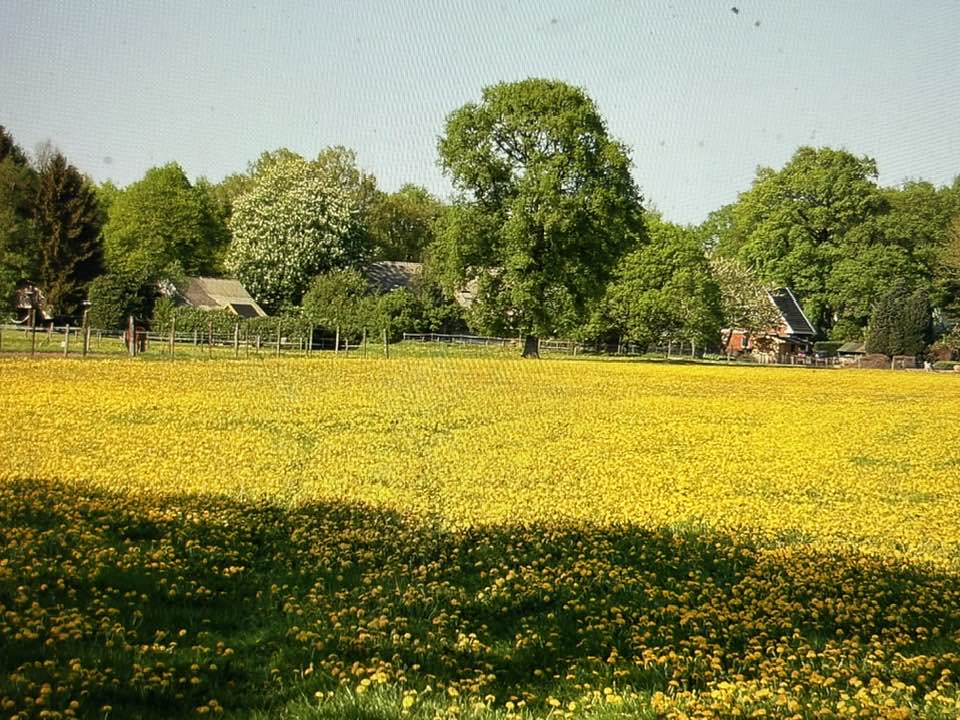
Of the many things Jenny and I learned about Sweden that spring was that dandelions in the countryside—maskrosor—grow to enormous size and in other-worldly abundance. The fields of knee-high “maskrosor” were solid yellow and barely penetrable on foot.
It was springtime in Sweden that set me on a grand expeditionary path; one that would eventually lead me all the way around our globe—and back to Sweden multiple times.
Decades later, in the crisis of my life, it was springtime in Minnesota that gave me a whole new lease on life. After a long, dark winter of medical treatment, by April I was feeling wholly “normal” again, and well enough to undergo a stem cell transplant toward the end of summer. I was 67 then.
Now in my 70s, with far more of life in the rearview mirror than I can see through the windshield (despite good fuel economy), I feel the same about spring I always have: a time of hope, a time to recharge and . . . to “re-aspire.” And above all, a time to count life’s blessings and not complain too much about the hot, humid weather. Not so many days ago, we had reason to complain about spring being late and now we think there’s reason to complain that summer’s arrived too early. But soon enough, cold winds will blow again, as we huddle around the hearth and share our New Year’s Resolutions.
Subscribe to this blog and received notifications of new post by email.
© 2026 by Eric Nilsson
