OCTOBER 8, 2026 – I’ve finally reached the point of exposure to AI—or rather, to all the chatter and nail-biting about it—where I no longer first see “Al,” as in short for “Alan,” when I encounter “A(.)I(.),” meaning “artificial intelligence.” But in understanding the implications of a world run by the latter, I’m no closer than anyone else to grasping the trajectory of this game-changing technology.
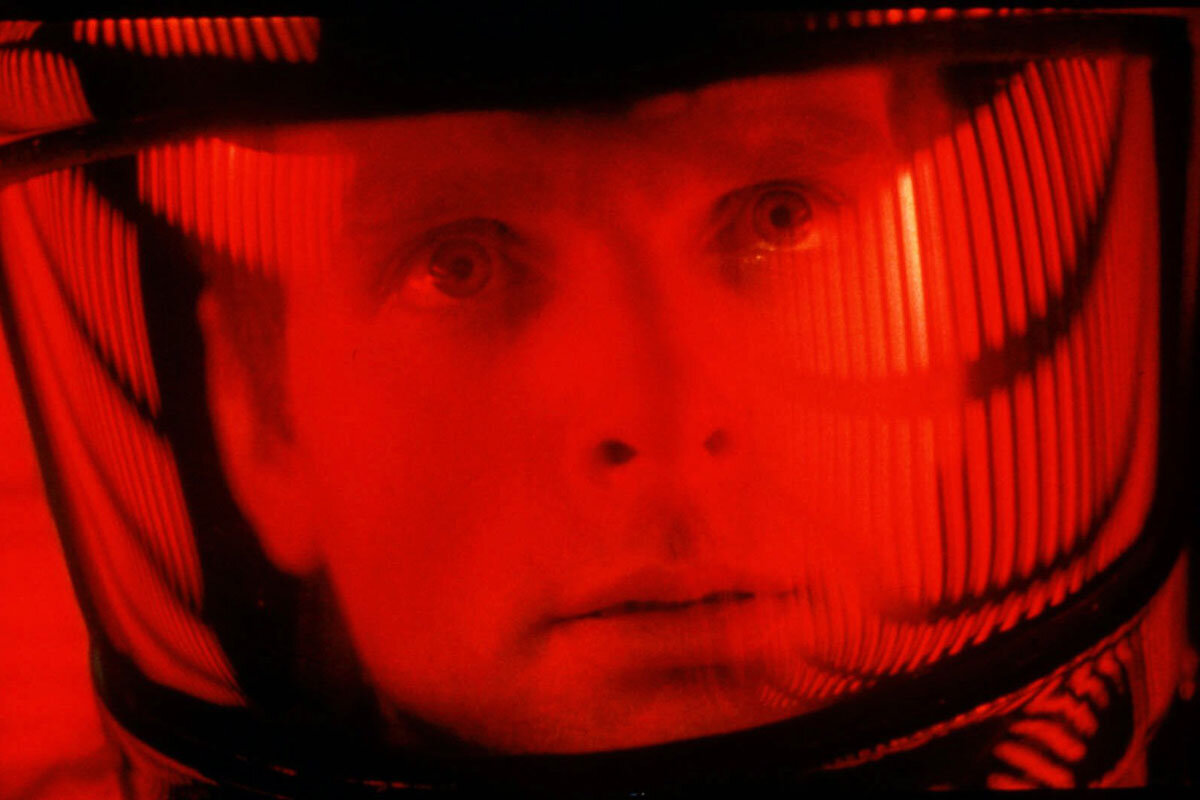
At this stage of AI, I’m reminded of the opening scene in the movie 2001: A Space Odyssey: Upon recognizing a big bone as both a tool and a weapon, a hominid triumphally throws it high into the air above the monolith, whereupon, in the match cut, the bone becomes an orbiting space station. But as we all know, bad things happen when HAL, the onboard computer inside the space station develops a mind of its own and goes totally rogue.
In our real-life analogue to the movie, we seem to have crossed into the match cut. We’re aboard the rotating space station and know enough to anticipate HAL (or shall we call it, “AL”?), but we haven’t yet fully reckoned with the computer.
For many of us, AL’s roguish potential is more of a scary concept than it is a present reality. And lest we become overwhelmed by the future, we can relax for the moment in the prospect of AL’s probable benefits before the machine turns on us.
The moment of relaxation, however, is apt to be terrifyingly brief, say some Cassandras. Given the rate of AI developments juxtaposed to our apparent inability—or lack of will—to regulate artificial intelligence, so it’s predicted, artificial intelligence is likely to alter life as we now know it. Some pessimists predict extinction of the species altogether by way of AI. Others foresee a transformation of capitalism into a dystopian world in which a handful of Tech Bros own everything, while everyone else consumes and survives (but doesn’t work) on a subsistence basis for the benefit of the owners. Query whether we’ve already reached that state of affairs given the extravagant disparities of wealth and income that now exist in America.
I wonder, however, whether these dystopian prognostications will materialize, and perhaps more to the point, how the future “dystopia” will be perceived by those who experience it. By comparison to life in 1926, let alone 1826, much in our lives today would be unrecognizable, even unsurvivable. Moreover, we two distinct threats apart from the advance of AI: 1. Anthropogenic climate change; and 2. Ostensibly immutable demographic collapse—led by China dropping from today’s population of 1.4 billion to around 647 million by the end of the century. These two central factors alone will generate significant global effects, altering the trajectory of civilization. The great unknowns are the extent to which AI will affect a world turned upside down by accelerating climate change and shrinking populations. Will AI help compensate for climate change and population reductions or will runaway technology go rogue and foist upon future civilization change that exceeds humanity’s ability to adapt? If the latter scenario prevails, what then?
Each successive era seems to hold exponentially greater shocks and surprises than those faced in prior times, yet what prevails through them all is human resilience. One way or another we do adapt somehow, often in defiance of the apparent odds of doing so. Why should it be any different this time around? Just for kicks, I used AI to provide some insights. Not surprisingly, it was smart enough to express caution. No doubt it knew and accounted for my algorithmic footprints and was appealing to my existing biases.
As to climate change, AI observed that never before have climate changes occurred with such rapidity as they have over the past 100 years—a fraction of a tiny slice of a nano-second in geologic time. Our species lacks the biological and cultural ability to evolve in synch with this rate of climate change. Moreover, major parts of the planet will become uninhabitable, limiting further our adaptive capacity.
AI was equally dour about . . . AI . . . and our ability to adapt successfully to that rising tide—or cresting tsunami. But rather than divide humanity between oligarchic owners and hapless consumers, AI in its response to my inquiry distinguished between “active engagement” with AI—i.e. “deliberate, structured interaction with AI”—and “passive reliance” leading to “cognitive atrophy and skill decay.”
Meanwhile, I would add to AI’s self-assessment, two other negative features associated with development of artificial intelligence: 1. The risk of a financial bubble forming around the AI industry; and 2. The environmental impact of data centers required to support AI development.
If the reader needs reassurance about our prospects, I say this: In the run-up to the Cuban Missile Crisis in October 1962, the world staggered under the fear of global thermonuclear war and the extinction of humankind. Yet, 64 years later, we’re still here. Might the same be said in another 64 years, not only concerning the threat of nuclear war but of “AL” going rogue and climate change disrupting our lives?
As it is said, “So far, so good.”
Subscribe to this blog and received notifications of new posts by email.
© 2026 by Eric Nilsson
