AUGUST 10, 2026 – I know that most people share my awe, fear, disbelief, and anxiety over the complex uncertainties of life in our era. Where is the country headed? What will happen come November? Will the Strait of Hormuz open before the global economy crashes? What’s with all the wildfires—are they a sign of environmental Armageddon?
Each of us deals with these and similar questions differently, but out of necessity, we frequently find diversions and distractions. Or more precisely, often diversions and distractions find us. Some people turn to spectator sports. Others turn on the TV. Many listen to music, while many more scroll through their social media feeds.
Me? I have an assortment of go-to distractions, from over-eating unhealthful snacks to walking up and down the hills of “Little Switzerland” a mile from our house. And then in my case, there’s whatever serves as my central project—currently building model sailboats.
But what beats all such diversions is watching the sun go down. I’m not talking beautiful sunsets here. Well, not yet, anyway. That isn’t to say I don’t like beautiful sunsets. Of course I do, just as everyone does. The specific aspect of a sunset that works as a cure-all distraction is the fact that it’s not a sunset at all.
Yesterday on my way home from the Red Cabin, my timing was such that as I approached St. Croix Falls, on the Wisconsin side of the St. Croix River, the lower 125 miles of which form the Wisconsin-Minnesota border, the sun appeared as a large reddish-orange ball in the sky above the distant horizon. Three things about this view were notable.
First, I was struck by how much daylight was still produced by the sinking orb. Yet, whatever diminished the solar brilliance—wildfire smoke, humidity; I couldn’t be sure—the reduction was such that I could peer at our up-close star without instantly having to look away. Under regular conditions, I wouldn’t have given a second thought to the fact that a star—our star—a massive concentration of atomic fusion was simply “doing its thing.” But now that I could bear to glance at Helios and see its red-orange hue, I could think about the sun and contemplate what my dad had said about it. Periodically he’d remind me that it was the ultimate source of all life on earth. At the risk of stating the über-obvious, Dad was right: the sun is really big stuff. Yet, right up there with oxygenated-air and potable water, the sun is taken for granted by most of us—from sun-up to sundown.
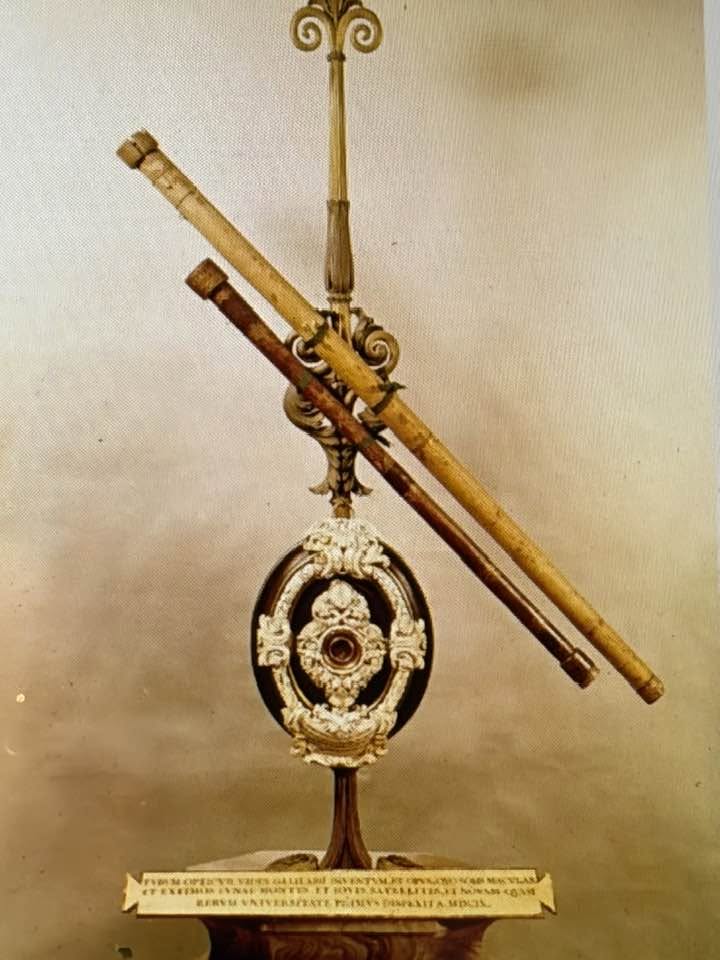
The second noteworthy feature of the sun-as-red-orange-ball was what I’d alluded to earlier: that it wasn’t setting. Or in scientific parlance, we live in a heliocentric solar system, not a geocentric universe. For centuries, humankind has squared itself with this irrefutable astronomical fact. But before Copernicus published his heliocentric geometric model of the solar system (1543) and Galileo provided proof through the lenses of his telescope (1610), people were burned at the stake for espousing such heretical notions that placed the earth, not the sun, at the center of things.
Now we know: the earth’s perpetual rotation on its axis as it revolves around the sun is the motion that produces the optical illusion (experienced solely from or near the surface of the earth) that the sun “rises” and “sets.” Only when you ignore the signals that your eyes and mind provide can you “get the feel” of existing on a planet that rotates.
When I first tried this years ago, I experienced a psychological epiphany. I was paddling around in a kayak and watching the full moonrise just as the sun “had set.” Instead of thinking, “What a cool moonrise!” I focused on the reality that the earth’s rotation is what produced the steady rise of the lunar face above the horizon. Somehow, when I trained myself to see the sun, moon and earth on these terms, I experienced a much closer connection to earth. It was the earth, not sun or moon, that was producing all those magnificent “sunrises” and “sunsets”; “moon rises” and “moon sets.”
The first two features above led inevitably to a dichotomous third: in the grand scheme of the cosmos, what I was seeing and contemplating about the orange-ball-sun was small potatoes; yet when sized against all the complex dangers in our lives of the 21st Century, the simple outcome of Newtonian physics eclipses everything we could possibly do with ourselves . . . and to ourselves.
Another two miles and I was descending into the valley—then ascending back out on the other side, When I emerged at the top and turned due west again, I had another glimpse of the red-orange-ball sun. The scene pleased my eyes and psyche. I didn’t have the need or desire to contemplate the laws of physics; this time, only the law of aesthetics applied, and I embraced it.
Subscribe to this blog and received notifications of new posts by email.
© 2026 by Eric Nilsson
