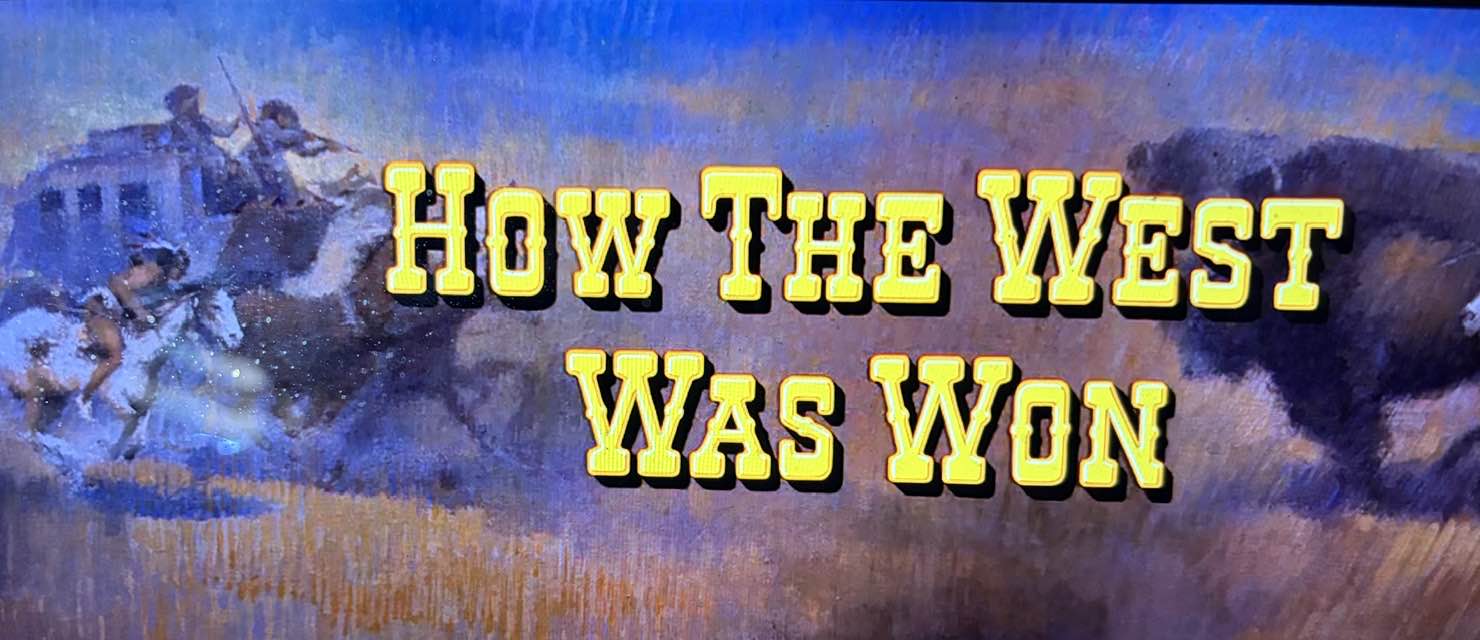
APRIL 13, 2026 – By the time I entered third grade, I was already deep into cowboy and Indian territory—as was the typical white kid view of the Wild West, given the cultural biases that surrounded us back in the early 1960s. This interest arose not from TV shows such as Gunsmoke or The Rifleman, since our family didn’t have a TV, though we did watch Bonanza Sunday evenings down at our grandparents’ house. That show was as much a part of the proceedings as was the main event—our grandmother’s culinary extravaganza earlier in the day.
My Wild West phase was inspired by multiple sources that reinforced one another. The primary source was Dad’s abiding interest in history. He subscribed to American Heritage magazine, a bi-monthly high-gloss publication that was hard-bound and arrived in a thick cardboard package. Dad read each of these cover-to-cover, soon after it arrived. I looked over the many photos and illustrations cover-to-cover, and read the captions. Not until fifth grade did I start reading the articles.
Next to the magazines, which occupied the majority of an entire shelf on the east wall of the den, were the American Heritage books on the Civil War, Historic Places, World War I, World War II and my favorite, Indians. Not for another decade did “Native Americans” replace “Indians.” I didn’t leaf through each of these thick books just once or twice. I perused them multiple times every week.
Meanwhile, for much of third grade, my row at school was lined up next to the windows. On the wide ledge, within reach of our desks, were various sets of encyclopediae, including a set devoted to American history. Every day, when Mrs. Lundquist went on break, I’d hurry to complete my math tables so I could spend the rest of her break time paging through books about the Colonial Period, the Revolution, the Civil War and the “Indian Wars,” as they were called.
At about this time, back home, Dad was entering his own “cowboy song” phase. As far back as I could remember he’d listened to classical music, but from somewhere an LP of traditional cowboy songs appeared in the record cabinet. The cover featured expansive ranch land dotted with cattle and a few honest-to-goodness cowboys. For a time Dad would play the cowboy songs after listening to Horowitz perform Chopin and before hearing Gieseking fill the room with Beethoven. The cowboy songs were fetching, however, and often, when no one else was around to get first dibs at the “Hi-Fi,” I’d put the cowboy songs on. Eventually, I became intimately familiar with all of them and would sing along—if no one else except my younger sister was in the house.
Another source of inspiration for my plunge into the history of the Wild West was Classics Illustrated. I had several of these comic book-“classics” about various frontiersmen. My favorites were Wild Bill Hickock and Kit Carson, and I read those stories so many times I had every frame and every conversation memorized.
All of this exposure to the history of the West led to serious fantasizing. I imagined myself riding horseback from Anoka all the way to . . . well many points “out West.” I pictured myself working on a ranch, then acquiring a ranch and building it up to half of west Texas. I went so far as ordering from the latest Sears Roebuck catalogue, equipment I figured I’d need for the expedition: a canteen, a mess kit, and what I thought was an ingenious device that contained a small mirror, a compass, and a small wheel at one end scaled for running over maps to calculate distances. What I planned to do about acquiring a horse is forever lost in the gaps of my childhood fantasy. My age—all of nine—or my parents’ probable objections, weren’t part of my calculus.
Then, wouldn’t you know it, but in March of my third grade the highly acclaimed movie, How the West was Won came to the schnazzy Cooper Theatre in St. Louis Park, Minnesota. The film would play for 88 weeks—the longest run outside of Hollywood. The Cooper boasted a giant curved screen, three projectors with 70mm film and posh seating for 800 people. Completed in December 1962, at the time it was considered the premiere movie theatre in the Twin Cities. Everyone had heard of it.
Of course I had to see How the West was Won, and to their credit, my parents recognized this as well. Dad even accommodated a second trip to the theatre—as much for himself as for me. I was riveted to every frame of the nearly three-hour, star-studded film. Last weekend, I watched it again—online. I was curious what my reaction would be this time around, especially in light of my reading The Rediscover of America – Native Peoples and the Unmaking of U.S. History by Ned Blackhawk. Right off the bat, of course, “How the West was Won” is the exact opposite of the Native view: “How the West—nay, the whole continent—was Lost.” (Cont.)
Subscribe to this blog and receive notifications of new posts by email.
© 2026 by Eric Nilsson
