AUGUST 28, 2026 – (Cont.) To replace the broken handle, a whole new rod had to be purchased. What would have to suffice was an inexpensive, one-piece yellow rod with an attached handle. We bought it at the local Erickson gas station back in Anoka. As far as I was concerned, this substitute rod was several steps down from the original that had come with the Sears Roebuck fishing set. For one thing, the color wasn’t nearly as attractive as the dark aqua, and moreover, no fancy thread was wound around the rod to keep the guides in place. If my memory is correct, the cheap yellow rod cost all of $1.99.
But I adapted. I also learned from the older kids who fished the Mississippi back home that if I wanted to catch real fish, such as walleyes and northerns, I should use a spoon lure and pork rind. If I wanted to go upscale, I’d buy a weedless “gold” spoon lure. I scraped together my allowance and made the recommended acquisitions (at the same Erickson station where Dad had bought the cheap new yellow rod) before our next trip up to the cabin.
Soon I was back in business, casting off the end of the dock. I loved doing this—casting, reeling in; casting and reeling in the line again. On one level it seemed rather pointless—attaching a large pork rind to the weedless spoon and casting/reeling umpteen times with no expectation of any results. On the other hand, this aimless process seemed much like playing catch with Dad almost every evening after work—another pointless activity from the standpoint of playing baseball, yet something I could’ve done unceasingly but for Mother’s calling us in for supper. Just as I became quite proficient at throwing and fielding a baseball, so I improved my skill at casting. With each attempt I could place the spoon and pork rind pretty much wherever I chose.
The following summer, when I turned 11, Dad took me on a canoe trip to the Boundary Waters. We retraced the route that he and Grandpa, along with Dad’s cousin Harry and Uncle Sigurd, had taken due north from the Gunflint Trail on the south shore of Gunflint Lake on the Canadian border.
This route led down the Granite River to Granite Lake, two days and several portages later. More specifically, our course took us to an island in Granite Lake. The rockbound place was little more than 125 feet long and only about 50 feet at its widest spot. For the most part it was a flat piece of rock with a few fir trees growing on it. The island made for a perfect campsite for the two nights we spent there, and it contained a natural small-scale harbor for our canoe.
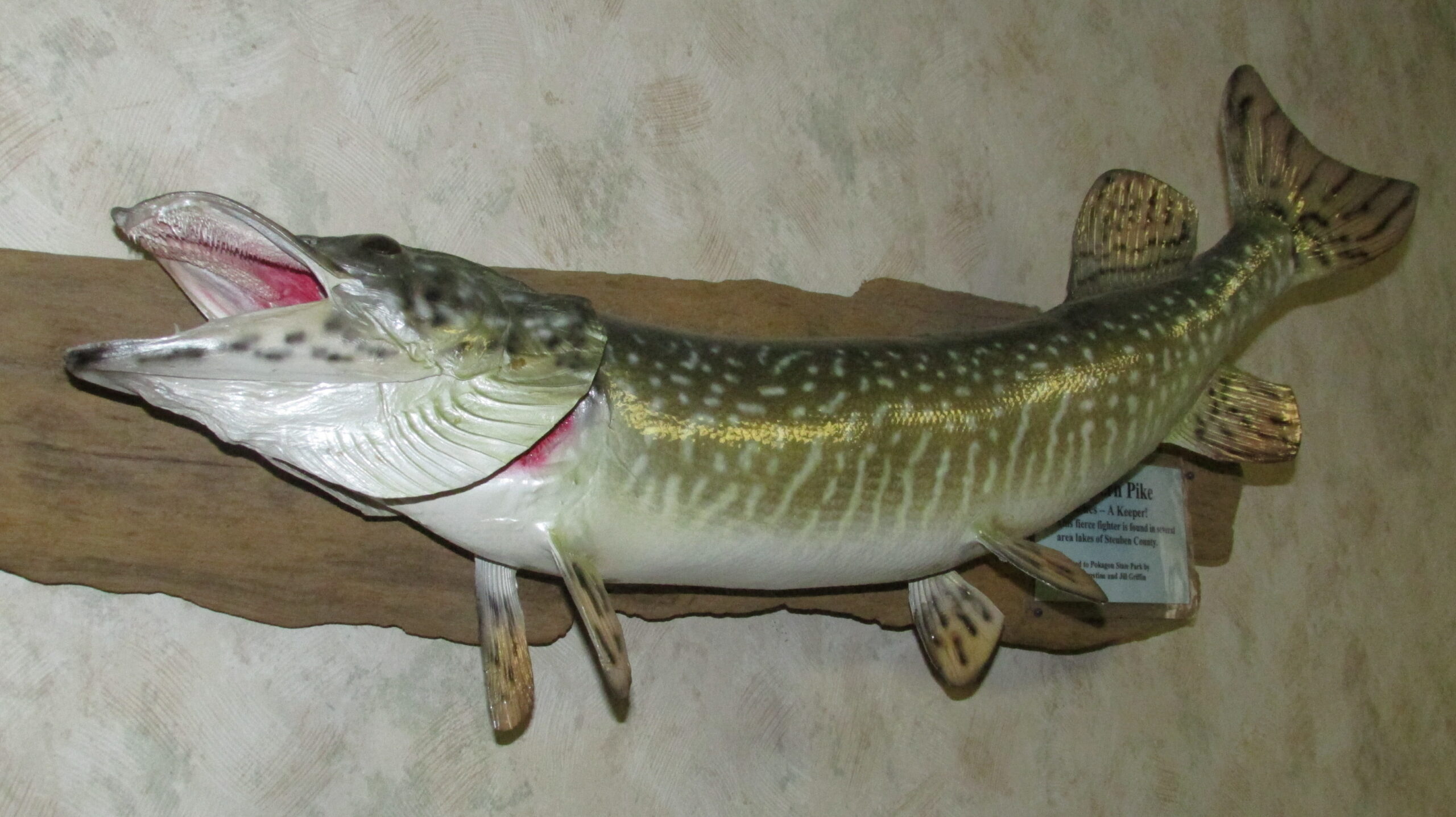
On the first evening of our stay there, I pulled out my fishing gear for the first time on our 10-day trip. While Dad was preoccupied preparing dinner—at a place about midway on the island, I walked the short distance to the end of the island to try my luck. On about the fourth cast, I got a large bite. I yelled out to Dad as I reeled in a small northern, perhaps weighing three pounds. We had no net with us, so I simply landed the fish on the granite slab that formed the north end of the tiny island. By this time Dad had made his way to my fishing spot. “Let’s see you take charge of this fish,” he said.
Placing my left foot on the thrashing fish, I knelt on my right knee to remove the lure. Fortunately, the hook wasn’t lodged very securely, and using the hook remover that had come with my fishing set, I gingerly removed the lure from the northern’s lower jaw. Once the lure was free, I used my foot to slide the fish across the granite back into the lake.
Dad then returned to his makeshift kitchen and I to my fishing. Amazingly, just three or four casts later, I caught another northern—about the same size of the first. Again, I called out to Dad, who came to my aid. The lure was lodged much better than had been the case with the first fish. This time the lure removal required a pair of pliers, which Dad retrieved from his small collection of emergency tools.
We returned this second northern to its home and resumed our previous activities—Dad to cooking; I to fishing. After another few casts, the whole operation would be repeated yet again and with the same result.
But this time when I called out to Dad, “I caught another fish!” He expressed annoyance. “I can’t keep helping you with these fish,” he said, “when I’m trying to get our dinner ready.” After helping “de-hook” the northern, he repeated his displeasure over the interruption. “You’re gonna have to quit this for now,” he said.
Just when my confidence had been rising, now Dad had thrown cold water on it. I realized too, however, that neither of us was much of a fisherman. If by dumb luck I’d been able to catch three sizable northerns and Dad was good at removing the lure, neither one of us suggested that we keep the fish, scale it, behead it, clean it, fillet it, cook it and clean it. After this third catch, I retired my fishing gear for the rest of the trip. Dad never said a thing about it, hoping, it seemed, that I wouldn’t either. And I didn’t.
During the years that followed, I’d “play catch”—id est, cast and reel for the pure fun of it—every summer up at the cabin, but I wouldn’t catch a fish until August 1981. And then, it wouldn’t be from Grindstone Lake or anywhere else in North America. But that didn’t seem to matter to me. I could say that I’d caught three northerns in the Boundary Waters. (Cont.)
Subscribe to this blog and received notifications of new posts by email.
© 2026 by Eric Nilsson
