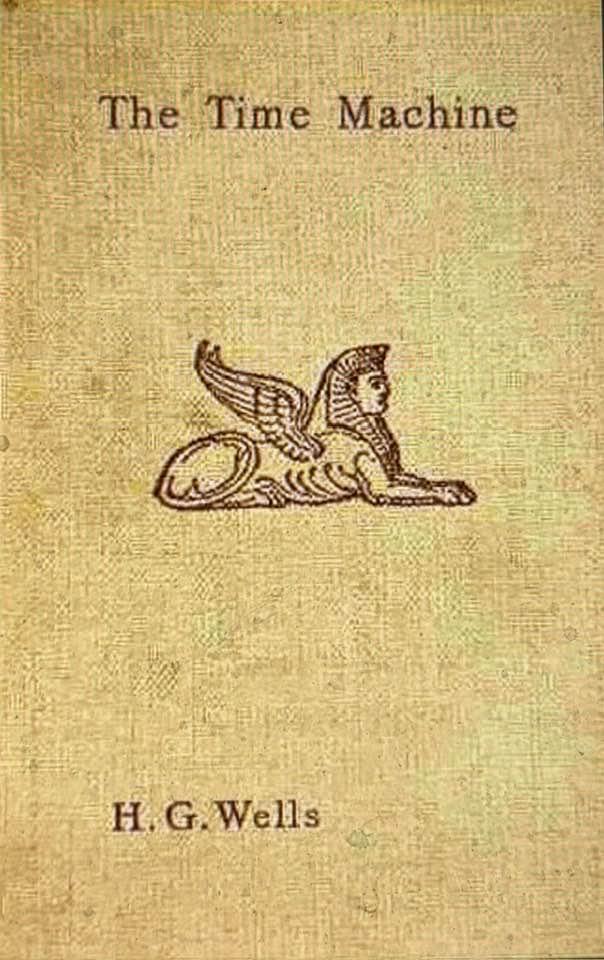
MARCH 22, 2026 – As my serial readers know, yesterday’s post involved a brief trip aboard my personal time machine. I assure my younger readers—I’m blessed to have some—that as you travel deeper into old age, your time machine logs miles . . . er, light years . . . at an increasing rate even when the vehicle is parked in the garage. My older readers can readily attest to this phenomenon. And just for the record, what we’re talking about here is the reverse mode. Rarely will you catch a geezer with long white locks and scarf racing to catch up, riding in a time machine heading into the future. An aging person’s outlook is driven by the inexorable logic of time: for anyone over the age of 70, there’s far more of it in “reverse” than exists in “drive.” Plus, of course, except in rare case of a clairvoyance savant, “memory” of the future is a logical impossibility; therefore, a person can’t drone on about things that aren’t yet knowable.
In “reverse mode” lies the inevitable mismatch between a kid’s perspective and the disposition of the kid’s grandparent. And to be sure, by the time you reach 70, the age-range of a “kid” has expanded to well beyond 20 years. Every single one of us with memories of a geezer grandparent is eminently familiar with the prefatory phrase, “When I was a kid . . .” or “Back in my day . . .” Depending on the acuity of the geezer’s memory, you knew you were (or know you are) in for an excursion aboard a time machine in reverse.
Some geezer memories are more interesting than others. When my geezer grandpa Nilsson reminisced about things, they were intrinsically interesting: his defining experiences in World War I, for example, or prior to that, hardships common to many Scandinavian immigrant families of the 1890s superimposed on the details of Grandpa’s particular circumstances, such as a motherless youth and a father who of necessity was largely absent. What made Grandpa’s reminiscences meaningful was that he’d survived his stories. I was impressed by the role of random interventions, such as the sharp reprimand of a log driver on the Mississippi who rescued the 10-year-old future Grandpa after his misguided dive into muddy log-filled waters wherein countless “deadheads” (sunken logs) lurked. It was such mishaps that motivated his father to scratch and save for violin lessons to keep Grandpa “out of trouble.” The side effect was to give the young and potentially wayward soul a future career as a professional violinist. Grandpa’s distant past would be tied directly to my sisters’ illustrious musical futures.
Then there was the other Grandpa; a captain of industry, a mover and shaker, a big man about town “out East,” who was never the doting type, though neither was he unkind or unpleasant. But he was mired in his past, shackled, ironically, by his obsession with his considerable achievements. His only way of connecting with my sisters and me, it seemed, was to connect us to his past. His unending monologues about business and civic works in the distant past could be excruciating.
I remember one in particular, delivered in the kitchen of my grandparents’ house, long after my grandmother and UB (“Uncle Bruce” – see the Inheritance series of this blog (May-September 2023)) had gone to bed. Grandpa droned on interminably—to the point where I had to take a pee, then really had to take one, then was in pain because I had to, then was in danger of wetting my pants to avoid a catastrophic burst of my bladder. But my relationship with Grandpa was so stiff and formal, it seemed, I didn’t dare interrupt him. He would’ve understood and been perfectly accommodating, but somehow, I felt so tightly strapped into his time machine and coursing in reverse with such G-forces at play that I couldn’t summon the words, “Uh, Grandpa, could you just wait a minute so I can go to the bathroom?”
Can I remember a single detail of his monologue that evening? No. All I remember is that I nearly wet my pants because his account took forever. Yet, despite the lack of a connection of the sort I enjoyed with Grandpa Nilsson, Grandpa Holman’s influence on my career choice and interest in business and politics was determinative.
Then there were the grandmothers.
My grandmother “Gaga,” wife of the Master of Monologues, lived largely unbound by the past, even as she approached her finish line at 100—with full memory and cognition intact. Occasionally she’d reminisce, but it was never in self-absorption or in judgment of us (e.g. Never, “Young people today are so spoiled. When I was a kid, we had to walk to school in a blizzard.”). Her spoken memories were whimsical, pleasant, almost dreamlike, thanks in large part to her family’s comfortable station in life. But her visits to her past were brief; a light snack, never a heavy meal. Yet, as often occurs with older people, her filters faded with the advance of decades, despite her insistence on adherence to the rules of etiquette.
Sometimes her unfiltered comments were shocking. Of my oldest sister’s college friend who visited one weekend, Gaga said, “Mary Ann is such a nice girl. Too bad she’s Catholic.” And more than once, “The problem with this country is that there are too many dark people living here.” To our ears, of course, these comments were cringe-worthy, but there was an oft-repeated couplet (of a sort)—directed at Grandpa—that brought us relief and amusement.
On most summer Friday evenings when visiting our Holman grandparents, we’d ride in the backseat of Grandpa’s Cadillac for the drive from their home in New Jersey to their retreat—the “Escape Hatch”—overlooking Hamburg Cove in Lyme, Connecticut. On I95 we’d see a wide range of trucks—for example, a Bekins Van Lines, a Mack tractor-trailer, huge tanker truck or a long flatbed hauling some special equipment. As the former president of the American Truckers Association, an I.C.C. practitioner, and the expert who wrote for Congress the “Holman Tariff Act” affecting interstate freight hauling, Grandpa knew all about the people, history and industry challenges behind all those trucks. And of course, he had to tell us pretty much everything about them. But just as predictably, after letting out his leash, Gaga would yank it back. “Oh, shuddup,” she’d say. “The kids don’t wanna hear all that.”
Being the even-keeled man he was, Grandpa would respond invariably with an almost amiable, “heh, heh,” through the permanently fixed and narrow space between his lips and jaws.
Our Grandmother Nilsson, “Ga,” meanwhile, whose childhood back in Sweden was full of nurture, not privilege, reminisced episodically about the idyll—the bucolic setting of the old family farm. A person of unusual refinement despite her rustic surroundings, she never imposed her stories on us. They were served up delicately, reserved for special times and places; during a ride on a glider swing on a deliciously warm summer day or on a casual walk along the secluded lakeshore path at the cabin, as waves splashed upon the stones. Ga’s memories, conveyed with the lilt of her Swedish accent, were musical poetry wafting through the woods from a distant time and place. Often when I walk that path today, I find my way back to those memories; her memories.
In a recent phone conversation, my younger sister remarked about her husband’s increasing focus on his past. Given his status now as the oldest of our tribe, Grandpa Holman’s successor to the art of the monologue has assumed rights to the phrase, “When I was a kid . . .” He skips over his considerable lifetime achievements and dwells on summer haying and other farm works with his uncle Jim on the latter’s farm near a place called “Nowthen” next to nowhere; a place forgotten by time but certainly not by my brother-in-law.
I now must work to avoid saying, “Back in the day, I . . .” although I’ve noticed that our 10-year-old granddaughter often asks my wife to tell about a favorite or scariest or funniest or otherwise most memorable childhood event, person, teacher, etc. I find myself savoring Beth’s responsive reminiscences—meaningful to Illiana and therefore, to me, as well.
As much as my own time machine travels mostly in reverse, I try occasionally to change direction and travel into the future; not my personal future, but to that of the world and of those who will inherit my place in time and space. What hope and courage can I convey to the people whose focus is by necessity trained on the future? We geezers must give them encouragement despite—or rather, because of—all the fears, risks, dangers, uncertainties that are already present in the future, just as they were present in the past and—lo and behold—as they shadow every fleeting moment of . . . the present.
Subscribe to this blog and receive notifications of new posts by email.
© 2026 by Eric Nilsson
