APRIL 4, 2026 – I have a very distinct memory of war. No, it didn’t feature bombs going off or people screaming death cries. The setting of my war story was our mostly quiet little town of Anoka, Minnesota, which straddled the Rum River at its confluence with the lazy Mississippi about 20 miles upstream from the big smoke—Minneapolis, not to be mistaken for “minnie.”
My “war memory,” as it were, opened with Mother’s appearance inside the classroom just after the bus kids had been dismissed and we “walkers” were preparing to exit. The teacher, Mrs. Lundring, whose flabby triceps and wrinkled face told me she was as old as my grandparents, if not older, greeted Mother with familiarity, and Mother, being Mother, started up an easy conversation about one thing or another. I remember nothing of the substance of the exchange except for what I could never forget: Mrs. Lundring asked Mother whether Dad has been “in the service.”
By my year of second grade—just 17 years after the end of World War II—I was familiar with the phrase “in the service.” It meant “army” or “navy” during “The War,” a terrible commotion involving death and destruction but not to be confused with “World War One,” about which Grandpa Nilsson had many stories—memorable with elements of danger but not so horrific that they couldn’t be told. The worst of his recollections was a broad question and riveting answer, to-wit: “Do you know what war is all about?” he asked. After we shook our heads, he provided the answer: “It’s grown men crying out for their mamas.”
Anyway, when Mrs. Lundring put the question to Mother—“Was your husband in the service?”—I knew what my teacher meant, and I knew the answer: “No.” Dad hadn’t enlisted and he’d avoided the draft—and avoided the fate of one of his closest boyhood friends, Arthur Peterson, who died in the Pacific. Due to extreme hay fever, Dad—and my sisters and I—had avoided Arthur’s kismet and that of the soldier’s theoretical progeny.
As Dad told the story, he’d reported to the induction center at Ft. Snelling just south of Minneapolis. It was the spring of ’42, and the queue was “a mile long,” stretching fatefully, as it turned out, into a field of unmown ragweed. Dad began to sneeze uncontrollably, as his eyes watered fiercely and he blew noisily into his handkerchief the size of a shirt (comparable, I assumed, to the handkerchief that Dad continually pulled from his trousers pocket when I was a young kid). In the midst of this fit, an army doctor whose shift had just ended, came walking along. Impressed by Dad’s battle with ragweed, the doctor stopped.
“Son, you’ve got it really bad, don’t you?”
“Yeah, well, I guess so,” said Dad, through the handkerchief.
The doctor asked questions, looked at Dad’s induction letter, pulled out some kind of pad, jotted something down, and handed the paper to the sneezing 20-year-old prospective inductee. “Here you go,” said the doctor of Dad’s draft exemption. “You can go home.”
Dad would later contribute to the war effort by taking a series of Greyhound buses to some place in Florida where he translated the instructions to Swedish-made machine guns purchased by the U.S. Army.
I was glad I knew about this. It provided cover for the time when other boys in the neighborhood and I were playing “war.” While my side was hunkered down behind a berm in the sprawling “battlefield” that was the Thurston’s front yard, waiting for the “Germans” to attack, one of the older kids asked me, “So, did your dad fight Jap[ane]s[e] or Germans in the war?” Instead of embarrassing myself by saying, “My dad didn’t fight,” I was able to say, “My dad was involved with machine guns.” I didn’t want the kid to think my dad was a chicken. (Meanwhile, Mother, whom Dad hadn’t yet met, “was involved” with fighter planes. While Dad was sneezing his way out of the draft, Mother was studying aeronautical engineering 12 hours a day at Rensselaer Polytechnic Institute. Her contribution to the war effort was conducting theoretical stress analyses on propellor designs.)
Mother’s exchange with Mrs. Lundring didn’t last long, but it made an impression. Two or three minutes later, as Mother and I (and perhaps Jenny[1]) were driving down Main Street toward Anoka Drug, I asked, “How does a country win a war?”
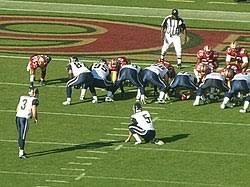
Mother answered with her usual confidence: “Whichever side has the most soldiers and sailors, the most weapons and the most ammunition.” In retrospect, her response reflected accurately the simple formula that had driven the Allies to victory over Germany and Japan. In the moment, however, I turned Mother’s answer into a simple image of the high school football stadium where two belligerent countries faced off; one side having more and bigger players and a bigger stash of guns and swords than the other side.
This imagery, I remember, prompted an idea, a question. “Why do the two sides in a war have to kill each other?” I asked. “Why can’t they just play a game of football, and whoever wins the game is the winner of the war?”
Mother liked my idea.
Now that Trump—and Netanyahu—have dragged the world into another war, this time without a blueprint, a fire escape or a fire extinguisher, I think it’s time to revive my second-grade idea. If I could simply get through to Pinball Pete, I’d suggest that Trump trade his hair situation for a football helmet and challenge Supreme Leader Khamenei the Younger to a field goal competition: first one to block a kick is declared the winner. The loser then 1. Undertakes his own regime change, 2. Relinquishes country’s nuclear weapons arsenal/capacity under the supervision of the IAEA (International Atomic Energy Agency), and 3. Pays $100 billion split equally among three funds managed jointly by the UN and IMF: a. Reconstruction of damaged/destroyed non-military infrastructure, b. Low- or no-interest loans to countries with low per capita incomes and slammed by spikes in energy and fertilizer costs, and c Investment in renewable energy.
I know it sounds like a (hash) pipe dream, but what a world earth could be if my idea were the “new way of war.”
Subscribe to this blog and receive notifications of new posts by email.
© 2026 by Eric Nilsson
[1] I don’t remember my kid sister being in the car, but since at that age I considered her at best a bothersome non-entity, she might well have been in the car but not within the framework of my self-absorption and thus, outside my long-term memory. Our older two sisters definitely weren’t with us.
