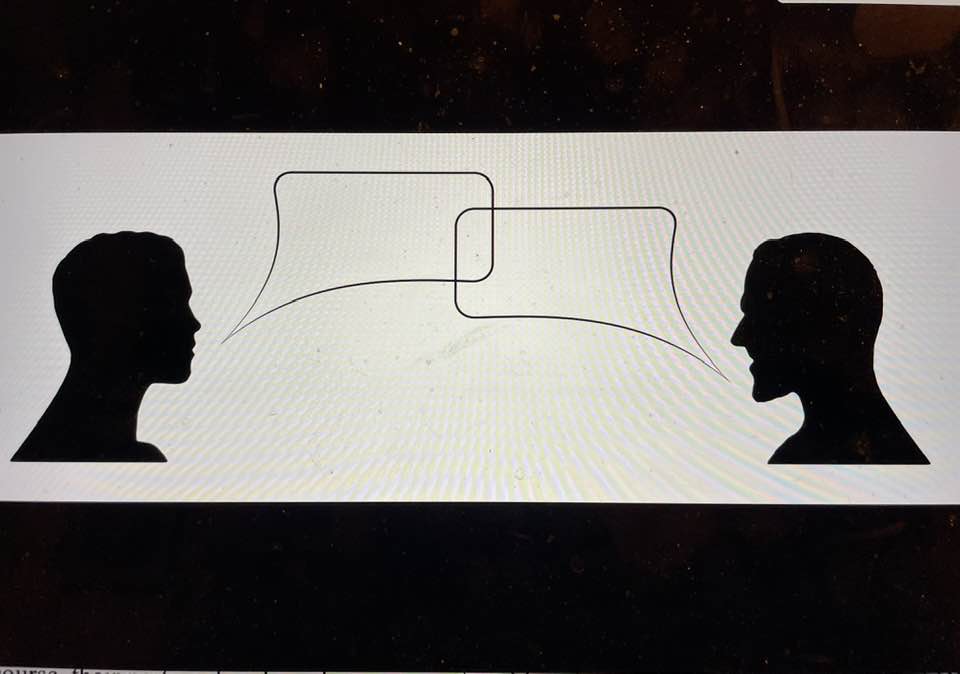
FEBRUARY 14, 2026 – Yesterday evening, Beth, our son Byron and I engaged in an earnest discussion about people we know well and who in the realm of politics are no more likely to change their minds than we are about to change ours. Even in a formal debate setting with strict rules of engagement, where each side is afforded ample accommodation for argument, counterargument and rebuttal, starting positions are likely to remain locked in place throughout the process. It’s no different in a courtroom trial, where evidence and argument are subject to objection and contrary evidence and argument, all arbitrated by disinterested parties—judge and jury.
At least that’s true of the “true believers” on both sides of the current political divide.
Left unanswered, however, is what each side is “to do” with the other: A. Avoid all discussion of divisive issues? B. Avoid the other side altogether? C. Bang our heads against the wall of resistance to our side’s facts, logic, analyses and conclusions? These were the questions we grappled with despite the late hour.
In the case of two people with whom all three of us are acquainted, Beth and Byron introduced the idea that at the root of intransigence is a worldview informed by deeply impressive personal experience steeped in personal danger and sense of injustice. No one who hasn’t shared that same experience of the subject individual can disabuse that individual of the impressions formed. Accordingly, the effort to change the person’s worldview derived from those impressions will surely be futile. Worse, it’s bound to make matters worse, driving heels further into the turf of opinion and leaving embittered, all concerned.
Byron then opined that vis-à-vis the individuals identified in our conversation, the best we can do is acknowledge the impact of their personal experience on their stridently held viewpoints and call it a day. Beth and I were inclined to agree.
But this kind of truce doesn’t resolve the tension between the people in our de facto truce and other parties who share our strongly held positions but not our familiarity with the first person’s personal experience and our own inclination toward a kind of truce. In such circumstances, what accommodation of our fellow travelers’ stridency is reconcilable with the truce we’ve struck with the first party?
To complicate matters further, we face others in our circle of acquaintances whose opposition to our views are informed mostly by disinformation; by established falsehoods, by easily provable lies and by omitted material facts as to which there is no genuine dispute, or worse, by abject bigotry or corrupt personal interest. Except for the corrupt or the incorrigible bigot, people with altogether misinformed views are actually more likely prospects for a “change of mind,” unless, of course, their party colors have become inextricably integrated into their psychological DNA. Barring psychic deoxyribonucleic acid transmogrified by social media algorithms and other influences, we have a shot at changing the minds of the misinformed, and therefore, ought to try.
Where, I wonder, does this analysis leave the body politic of America? More or less deadlocked? If so, how can the deadlock be broken, and in any event, how will it be broken? And what will the process do to the social fabric of our country beyond what’s already been torn asunder? Perhaps the most important question, however, is what approach is incumbent on each of us when interacting with people who adhere to opinions we find repugnant.
Subscribe to this blog and receive notifications of new posts by email.
© 2026 by Eric Nilsson
