DECEMBER 4, 2025 – While waiting for an appointment the other day, I picked up an orphaned section of the previous day’s local newspaper and flipped through the pages, skimming the headlines as I went. One stopped me long enough to read the article—hoping I wouldn’t be called before I’d finished. The headline read, “A lost generation of news consumers? Survey shows how teenagers dislike the news media.” The story highlighted the degradation of journalism in America; strike that—degradation of the reputation of journalism
I’m not a journalist, but through my long-standing affiliation with the World Press Institute, I’m no stranger to bona fide journalists and their guiding principles. At the center of a journalist’s work is evidence, much as the courtroom lawyer’s laser focus is on . . . evidence. The parallel continues with the critical evaluation that journalist and lawyer each applies to evidence.
With the advent of “cable news” many years ago, followed by the proliferation of “internet news,” and more recently, “podcast news,” traditional journalism has been absorbed into “news media,” which in the main, is opinion masquerading as “news,” but often untethered to the rigorous standards of traditional journalism. Blurred with opinion is pure propaganda posing as truth.
Yet, doubtless the teenagers with negative perceptions of the “news media” have little grasp of the distinction between blowhard opinion and traditional journalism, given how all publicly disseminated “information” now counts as “news media.” This reality has disturbing ramifications for democratic governance. Democracy implicitly depends on a well-informed electorate able to distinguish pretenders from genuinely qualified officeholders and their challengers; to understand the critical issues of the day; and to evaluate what officeholders/challengers have to say about addressing those issues. Absent rigorous journalism—consisting of thorough information gathering and critical vetting at local, state, regional, national, and international levels—even a well-educated electorate cannot be broadly well-informed about the workings of government, critical issues, and what office-seekers have to say about them. If regard for real journalists is contaminated by cynicism about the “news media”—however justified that cynicism might be—the quality and eventually the viability of our democracy will be jeopardized.
Much of the problem is financial: what generates clicks, views, and followers—i.e. advertising revenues—are “hair-on-fire” influencers, at the expense of trained journalists paid to keep us informed, not simply agitated. Inseparable from the financial part, however, is the addictive nature of agitation. After one fix, we search for another . . . or more precisely, the next fix finds us, and off we go on another round of agitation.
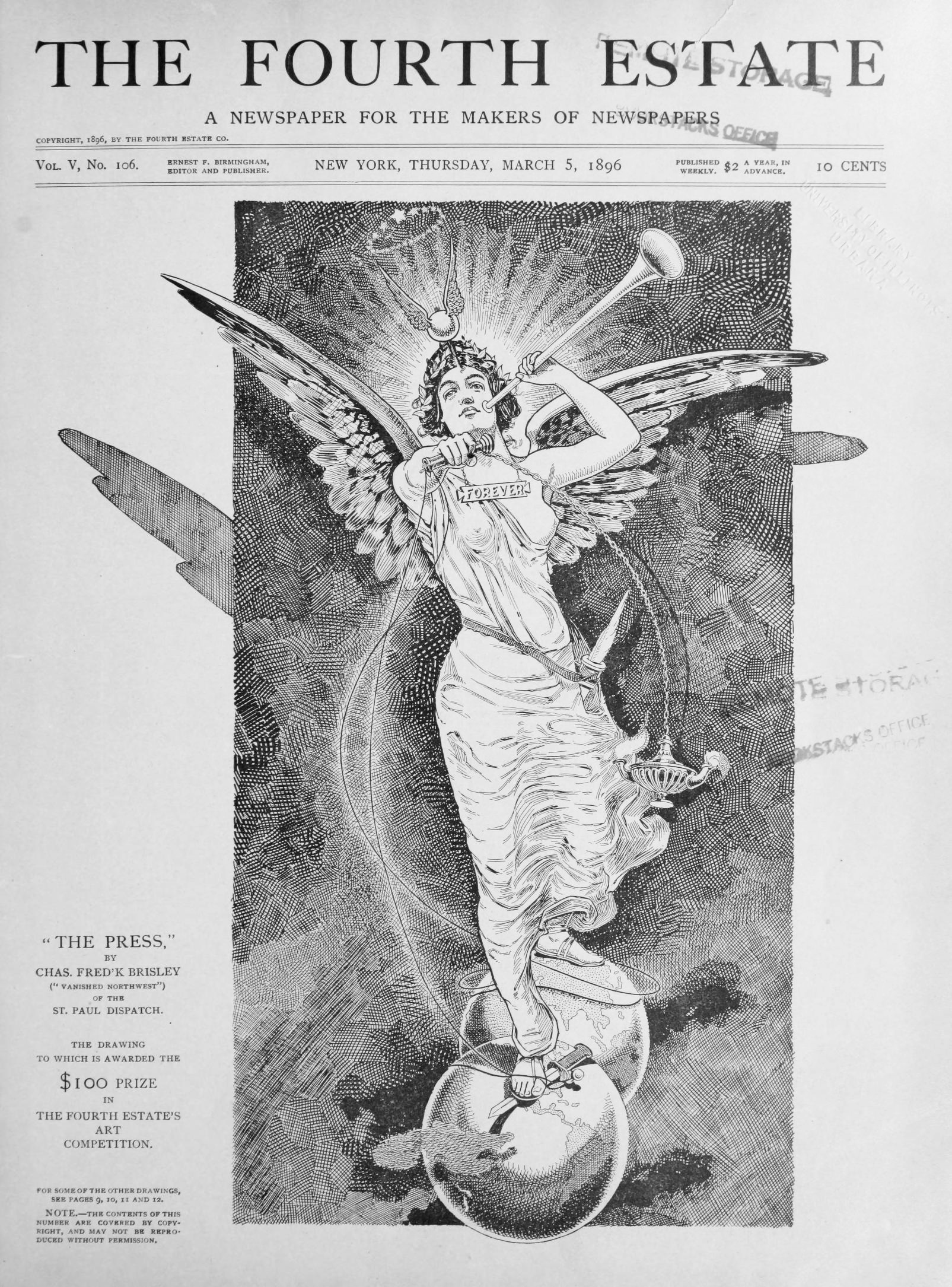
Before we can tackle the critical challenges facing America, we need to restore traditional journalism to its recognized eminence as the “Fourth Estate”; the institution that holds the executive, legislative, and judicial branches of government accountable. But where to begin? Ah ha! With the teenagers of America—and their civics classes. And greeting the students each day of class should be a bold banner embellished with colors red, white, blue, and bearing the words, “No reporter is an enemy of the people, but a demagogue who calls a reporter an enemy of the people is . . . an enemy of the people.” But then one way or another, the hat needs to be passed around—among all citizens—to provide the financial support for the Fourth Estate.
Subscribe to this blog and receive notifications of new posts by email.
© 2025 by Eric Nilsson

1 Comment
Excellent!