FEBRUARY 10, 2026 – Blogger’s note: Because the server was down for upgrades late yesterday, publication of this post was delayed.
Nearly nine years ago, Don Lewis, a pillar of the local legal community and with whom I’d worked long and hard on a project, invited me to lunch at the Atlas near our office buildings in downtown Minneapolis. Before returning to private practice, Don had served as Dean of the Hamline University Law School in St. Paul and was appointed as special prosecutor to assist the Ramsey County Attorney in the investigation and charging decision involving the shooting death of Philando Castile.
After catching up on life, we talked politics (as usual), then the recent acquittal of Jeronimo Yanez, the cop who shot and killed Philando Castile during a routine traffic stop. Once the waitperson had taken our order, I transitioned to a larger issue. “Don,” I said, “for a white guy like me, where’s the doorway, the window, the opening for me to understand the whole crushing matter of racism in America?”
“Housing,” said Don without any hesitation. “You’ve got to look at housing. For generations, local, state and federal law embraced housing policies that were overtly prejudicial against non-white people. If you follow the long-term ramifications of those policies, you wind up with the disparities and inequalities that drive racial tensions to this day.”
Two days later, the book, The Color of Law by Richard Rothstein showed up inside an Amazon package delivered to my office, compliments of Don Lewis. The book remains one of the key volumes in my self-directed study of civil rights in America. Don was positively correct: housing was my doorway, my window, my opening into the question, “How did things get to be the way they are?”
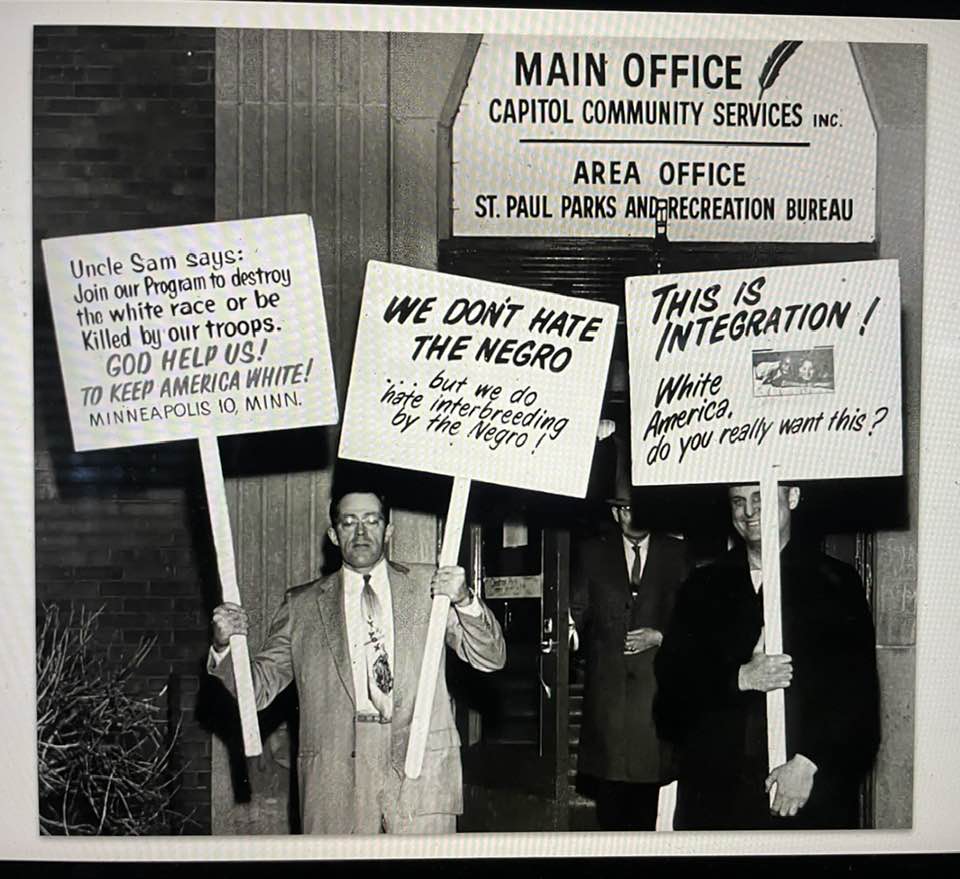
By a variety of means, from restrictive deed covenants to redlining by mortgage lenders to zoning restrictions imposed by municipalities, Blacks were excluded from the more desirable neighborhoods across the country. Coupled with this exclusion were inferior schools, limited transportation options, and less favorable employment opportunities, all being a function of sub-par housing in undesirable locations. Roll this disparity forward for several generations and you wind up with a marginalized segment of the population—further disadvantaged financially because they are largely deprived of the principal source of wealth creation and inheritance in America: home equity.
This morning I took a webinar for CLE credit, called Mapping Prejudice and Racial Covenants in the Twin Cities presented by Kirsten Delegard of the University of Minnesota. It was a fascinating class examining the “color of law” at our local level, and it captured the sordid history of racially proscriptive deed covenants throughout our fair cities of Minneapolis and St. Paul. But to be sure, restrictive racial covenants appear in the chain of title to property across the entire state. Though rendered unenforceable by state and federal statutes and constitutional case law, the explicit racism of yesteryear is the source of so much inequality today.
The presentation contained many memorable segments, but a few stood ahead of the rest. First was the method of research—using legions of volunteers to scour property records for restrictive covenants and mapping them by date of filing. A time-lapse portrayal of the spread of racial covenants was astonishing—a bit like watching the spread of the plague over a half-century. Second was how many people were involved in perpetuating racism in housing—realtors, developers, home-buyers, home-sellers, elected officials and agency bureaucrats. The whole system of home ownership was entirely rigged against African Americans (not to mention Jews). Third was the effort it took on the part of some indefatigable Black organizations and lawyers to press for changes in the law to render racial covenants unenforceable.
What gave the presentation special force was Dr. Delegard’s personal story and reflection. All four of her grandparents were Swedish immigrants with limited formal educations. They worked hard, started businesses, and achieved enough success to buy their own homes in south Minneapolis. When she examined title to her paternal grandparents’ home near Lake Nokomis, Dr. Delegard discovered the usual racial restrictions. Life happily progressed as (white) Minneapolis prospered. No one gave any thought to the deed restrictions on the family’s lot or similar restrictions on all the other lots in the neighborhood. Life was good—for the self-segregated whites (mostly of Scandinavian heritage).
Fast forward, and the Delegard house appreciated. Fast forward more and Dr. Delegard and her siblings were the fortunate heirs to the expanded equity. She used her share to make a substantial down payment on her own home. Then came the acknowledgment: she benefited directly from the legacy of racist housing policies. It was not lost on me that I too—along with so many other third generation American whites—enjoyed substantial advantage over Black Americans; an advantage that amounts to “white privilege,” certainly from the perspective of Black Americans.
If outright racial discrimination in real estate deeds has been unenforceable for nearly 60 years, the generational impact remains in effect. Overcoming the impact begins with knowledge and genuine acknowledgment, but the process mustn’t stop there. Much work remains to be done before we can redeem society from historical injustice. The effort requires study, thoughtful examination of current conditions, robust debate, and ultimately, development and implementation of sound policies. And yes, doubtless money, much of it to compensate for a long-outstanding bill. But amidst all the distractions created by the current regime, when and where will we find the time and resources to treat the stain of the “color of law”?
Subscribe to this blog and receive notifications of new posts by email.
© 2026 by Eric Nilsson

3 Comments
I always have to chime in when The Color of Law is mentioned. Definitely one of my favorite reads of the last several years. I liked it so much I emailed Rothstein and was delighted when he answered. If I’m not mistaken, I shared his response with you.
Yes, Jean, I do remember. The book, I think, ought to be “required reading.”
(P.S. I hope you’re doing well.)
Very thoughtful. Thanks.