MAY 10, 2026 – Rarely do we find pleasure in facing our abject failures—let alone in talking out loud about them. I think this aspect of the human condition is a survival instinct. If we were to dwell on our defeats, we’d sink further into a quagmire of hopelessness, endangering our very continuation as a species. As a member of humanity and thus endowed with this survival instinct, I find myself focused more on the direction of the river’s current than I do on its source. The white-water and waterfalls that I’ve portaged or survived upstream are of the past; to navigate successfully into the future, generally I must face that direction. Nevertheless, as any student of history knows, upstream lessons can inform one’s approach to downstream exigencies.
Plus, with the right attitude, upriver recollections often provide ample amusement. Often the degree of entertainment is directly proportional to the amount of intervening time. Another way to put is, “In hindsight, naivete is beautifully quaint.”
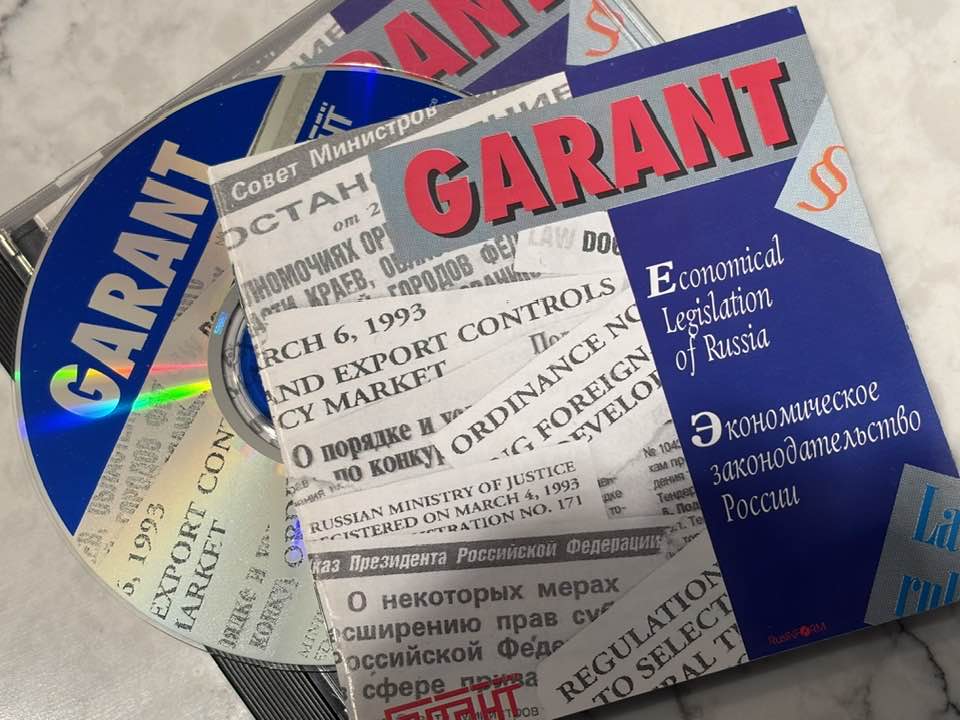
One of my most amusing personal failures was linked to the collapse of the Soviet Union and “cutting edge” CD technology (tongue fully in cheek), combined with an abundant case of . . . naivete. Such is the nature of the uniquely American brand of entrepreneurship. How this matter became the subject of this post is a story unto itself, but to provide a shortcut, I’ll confine the story behind the story to footnote 1 below.[1]
The story began with one of the “wunderkinder” I’d hired into my group at Norwest Bank before the regional outfit morphed into the national banking giant, Wells Fargo, by way of a merger. This particularly well-traveled character shared my interest in international affairs, especially the unfolding saga of post-communist Russia. One day over lunch said Wunderkind spoke to me about a promising new venture he’d stumbled into by way a family acquaintance on his father’s side. Reportedly, this acquaintance had worked for the CIA, as well as the State Department, and though his portfolio had been rather shadowy, it involved matters relating to the Soviet Union and Eastern Europe. Now retired, with the break-up of the USSR, this former spy (?) had recently pursued contacts in Russia with the idea of forming business partnerships to take advantage of what was fast becoming the “Wild East.”
One idea was to assemble all extant commercial laws in Russia and publish them in a single, indexed and searchable digital format for use by Western businesspeople eager to be the new capitalists in the old land of communism. I was intrigued, and on a bank business trip to Washington, D.C., I actually made contact with the “idea” man whom I imagined was a former agent of espionage.
I returned home with a proto-type of the “product”—a CD supposedly containing the entire body of then current Russian commercial law quaintly, as “Economical Legislation of Russia.” Though in context, “Economical” (vs. “Economic”) was grammatically incorrect, it was an ironically accurate double entendre, given the comparative brevity of the “legislation.” In any event, the laws were in both Cyrillic and English, and though little of the Cyrillic made sense to me, the highly stilted English was understandable—as far as it went. Having no legal frame of reference, however, I found evaluation of the compendium close to impossible.[2] Nevertheless, conceptually, I could see its value to would-be Western investors—and their lawyers—in the new Russia.
Being the clever and practiced American capitalists that we fashioned ourselves to be, Wunderkind and I decided to go into business with the former CIA agent. Wunderkind and I, at least, saw it as the gateway to great wealth. Our timing was perfect, we thought. It was 1995, and the anticipated opportunities in “capitalist” Russia were infinite. We’d peddle a boatload of the CDs to eager buyers, and certainly that would lead to bright prospects. In time we could leave behind our current staple of indenture trusteeships, Chapter 11 bankruptcy creditor committees, and class action settlement administration, which formed the three-ring circus of our daily work at the bank.
“Where do we start?” Wunderkind asked.
“We form a company,” I said.
“How do we do that?”
“We hire someone at Faegre.” – “Faegre” was a reference to “Faegre & Benson,” the firm that we used for all our bank matters. Since having joined the bank a year earlier, I’d conferred almost daily with my good friend TK, head of the firm’s litigation department, and my principal outside legal counsel in never-ending bondholder “meltdown” litigation. I’d already told him about the prospective gambit with the CD, and intrigued, he’d offered to put us in touch with the head of the firm’s corporate department. Wunderkind and I soon found ourselves in a meeting with TK and his law partner, ever so eager and able to help us out.
A few days later, we had our “company,” and I had a major hole in my pocket. When I showed Wunderkind the invoice, he quipped, “Gee, I thought we were investing in our own company, not the law firm.” Fast-forward thirty-four years and I would have slammed together the LLC myself, paid the filing fee and called it a day. Strike that: today, I’d save myself the filing fee and toss the CD into the trash—no LLC formational documents necessary. But born of extreme naivete, one lives and learns.
Wunderkind, however, gave the effort the college try—at the same time he was giving actual college the fully applied college try to acquire his undergraduate degree. That accomplishment, which had eluded him while he’d racked up an impressive range of real-world experience, seemed almost silly. His well-established, on-the-job wunderkind proclivities and unusually broad field of knowledge soared well-beyond the typical bachelor of arts or science degree. In due course, so to speak, he refocused his considerable intellectual gifts and inexhaustible energies on the challenges of his job. In league with his fellow wunderkind, he would go on to conquer many mountains.
I don’t remember how many CDs we sold, but guessing I’d say somewhere between 20 and 30. Most of the buyers were academic libraries. They responded to faxed-in solicitations that Wunderkind sent randomly after work each day. I also don’t remember how many CDs were in Wunderkind’s home-stored inventory, but I know one thing: they didn’t occupy as much space as my innumerable cartons of Severance Package (“The novel your boss does not want you to read”)—another of my failed ventures, at least from a commercial standpoint.[3]
Subscribe to this blog and received notifications of new posts by email.
© 2026 by Eric Nilsson
[1] While waiting for the outside temperature to rise above “Reynaud’s territory,” I tackled a five-foot-high stack of audio CDs stored in an upstairs corner of the house. They were wholly unorganized—empty jewel cases, often discs mismatched with jewel cases, and all genres of music, artists and composers mixed up something fierce. It took some time just to complete the first of multiple rounds of organization. A half hour later, I reached the very bottom CD, which is the subject of this post. Post-note: I never lack material for this blog site—provided I’m remain open to finding subject matter where it’s least expected.
[2] At around this time I attended an annual conference at Vail for lawyers, turn-around experts and investors sponsored by the old PriceWaterhouse firm. One of the lawyers present was an bankruptcy guru from Hale & Dorr (now WilmerHale), the old silk-stocking Boston firm. He’d recently returned from a stint in Russia teaching Russian lawyers about insolvency law. He was flabbergasted by their apparent inability to grasp the concept of financial insolvency; broadly defined by us Westerners as “the inability of a person or enterprise to pay its indebtedness as it comes due.” He reported also that there was much else about Western commercial law that was completely baffling to Russians. I imagine that at that stage of Russia’s development, the cogency of its commercial law was limited.
[3] From a non-commercial perspective, it gave me great satisfaction. Sales exceeded 2,000 copies—often bought by total strangers to me. On the eve of the inaugural signing event at the downtown Minneapolis Barnes & Noble, I’d told my wife that I’d consider the book to be a success if I saw it in the hands of a perfect stranger. (The signing drew more people than that store had ever had at a book signing, but a good many of them were friends and acquaintances.) A few weeks later (after several subsequent signings in local bookstores), Beth and I were touring a house for sale. When the realtor led us into the owner’s library, I was impressed by the inventory. As I surveyed it, I was pleasantly surprised to see Severance Package on the shelf—next to an array of John Grisham novels in the “Popular Fiction” section. The homeowner, whose name I got from the realtor, was a total stranger to me. Bingo!
