AUGUST 4, 2026 – The current era reminds me of a key feature in Highlights for Children magazine, which was popular with teachers, parents and slightly nerdy kids back when I was in second grade. My “go to” page was the one with all the “mistakes” that you were supposed to identify—you know, the shoe in the branches of a tree, the tire in the garden, the turtle in place of a cap on the farmer’s head . . . well, maybe not something as stupid as the turtle, but you catch my drift. As I became more practiced at spotting the “mistakes,” I was much swifter in identifying all 23 (or whatever the count might be) in the picture of the latest issue. I don’t remember much about the rest of the magazine content—stories, puzzles, bits of advice, et cetera—because for me, the “mistakes” page was the boat, the motor, the fishing pole, the hook, the line, the sinker, the net and the stringer of the magazine; or to be more succinct, the “whole enchilada,” as far as I was concerned.
With a whole decade of my old Richie Rich comic books having materialized into real life—but with the eponymous character having been transformed into “Crooked Crook”—I’m still every bit the expert at catching outlandish “mistakes” as I was with that favorite feature of Highlights for Children.
I’ve become so accustomed to the constant deluge of reported grift, deceit, chicanery, corruption, cruelty, and incompetence that by day’s end, it all seems as if it’s part of my daily workout regimen. It’s a bit like training for a running marathon: several weeks into the program, what’s another mile added to a daily workout of 15 miles? And “when I lay me down to sleep,” I’m quite able to drift into the Land of Nod without a hint of woe.
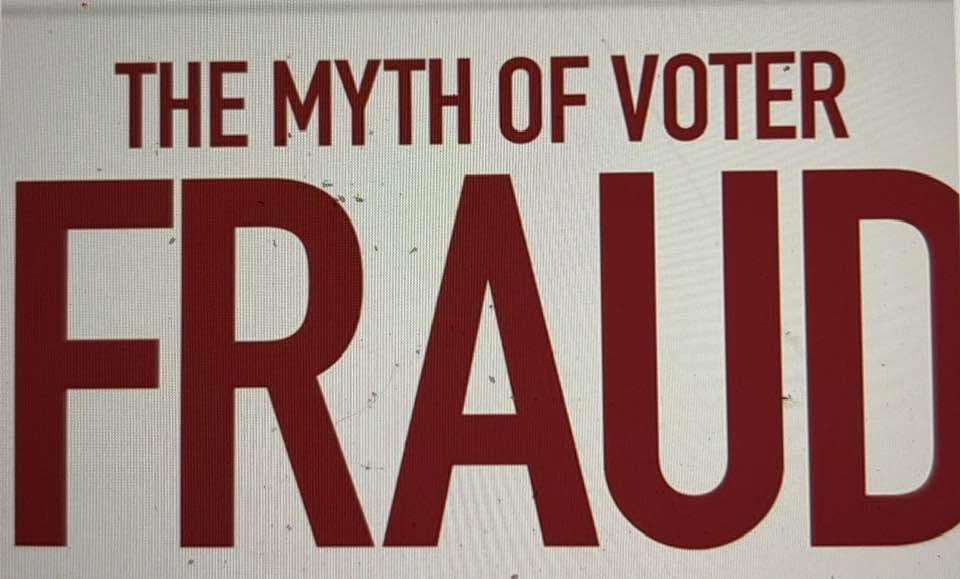
But last night I experienced a troubling exception. It was spawned, I’m sure, by the tired device of the man who’s completely unfamiliar with something as basic as a straight line. That device, of course, is the Red Herring; the Issue that is a Non-issue, or at least not the “issue” that he labels it as such; the Solution Looking for a Problem. In the instant case, the solution is voter suppression, and the problem is alleged “voter fraud.” As is the case with all other fraud claimed by this hapless man without a true friend in the world, the irony is that the ultimate fraud is in his self-serving use of the word “fraud,” particularly when considered against the backdrop of his own out-in-the-open-in-your-face-gargantuan-fraud against his friendless world.
The “troubling exception” to my normally trouble-free sleep pattern took the form of a dream hearkening back to my undergraduate days. The setting was a campus-wide election, not as an inconsequential popularity contest, but to positions of authority over administration of the institution. In this twisted adaptation of reality, whatever set of half a dozen people were elected to the “administrative council” would be in charge of a multi-10s-of-millions-dollar budget; the hiring and firing of faculty and staff; the granting of tenure; the admission of students, and so on. Yet, to head off a scenario wherein “the inmates would be placed in charge of the insane asylum,” the cast of candidates included a “most favored” slate endorsed by the board of trustees. This group of office seekers would receive campaign funds, endorsements, and other forms of support to enhance the likelihood that they would prevail in the election. All would be good in and for the world, at least according to the trustees.
As often occurs in the Land of Nod, however, things soon went awry. The student body had been all too well educated in critical thinking—too well educated in math, science, and philosophy—to take things sitting passively through another carefully scripted lecture in stamp collecting (what one of the physics profs at my alma mater derisively called “history majors”). First, a cadre of self-appointed student leaders recruited volunteers to monitor election stations across campus. Second, the leaders demanded—and won—the right of these volunteers to collect the paper ballots and tender them to the official vote-counters. Third, the leaders forced the administration to provide space on the ballots for write-in candidates.
Somehow, I wound up as one of these election volunteers. But shame on me, I was rather lackadaisical about my duties. I assumed that my responsibilities would be limited to sitting at a table, collecting paper ballots, then handing them to some designated individual responsible for tabulating votes. While engaged in an unrelated conversation with an acquaintance, I heard a vague announcement about a “training session.” I chose to ignore it. What possible “training” would be required for the perfunctory role of “election volunteer”?
In the next scene, I was at my station, collecting ballots. I was surprised by the flurry of activity. A long queue of student voters had formed, and in quick succession, they passed their ballots to me across the table. I noticed that in nearly every instance, the ballot was bore the penciled name of a write-in candidate.
Eventually, the polls closed, and I dutifully gathered up my pile of ballots, straightened them out, and carried them forthwith to what I thought was the designated central office for administration of the election. I then returned to my more familiar surroundings to fraternize with friends. Time passed. Daylight yielded to dusk, I noticed, and after further gabbing, I saw that nighttime had descended over campus. At about this time, we volunteers received a text message reminding us submit our ballots by no later than 2 a.m. I thought the hour to be strange, but no matter—I’d already submitted my ballots and told my friends so. Provided they’d done the same, we could now go forthwith to the “Stowe House”[1] for a few rounds of brewskis.
Just then, a good college friend (in reality), Jeffrey McCallum, appeared. He was one of the student leaders, and he looked terribly haggard as he broke down folding tables and chairs that had been set up at one of the polling stations. “Did you count all your ballots already?” he asked.
“Uh?”
“Did you tally the votes on your ballots and submit the totals to the election office?” he asked.
“I just turned in the ballots. I didn’t tally the votes. Were we supposed to do that?”
“Didn’t you attend the training session?”
My heart sank. It was instantly as clear to me as it was to Jeff that I’d opened wide the door to fraud on the part of the people running the election office—people we all knew were in the pockets of the trustees. They would simply ignore all those “write-in” candidates on the ballots I’d submitted and count only the votes for officially endorsed candidates.
The people around us who overheard our exchange were just as horrified as Jeffrey by my gross negligence. How could I now possible remedy my error? In desperation I considered rushing back to the election office and asking for a return of my ballots, but in the same instant of the synapsis generating that thought, another neurological spark informed me that it would be a fool’s errand. All by myself, I’d invalidated the huge pile of write-in votes that had been entrusted to me. I felt physically ill—so much so, the only option I had was to . . . wake up.
Even back in the “real world” I remained shaken by the dream; by my negligence and consequent responsibility for “election irregularities” that could well affect the outcome of an important election. What struck me was that Trump’s years-long campaign to undermine the integrity of our electoral process had found its way deep into my sub-consciousness. What must it be doing, I thought, to tens of millions of voters who don’t know any better than to swallow whole, a red herring the size of a tuna? Do they not understand the practical, factual significance of dismissal of all 63 of his bad faith lawsuits alleging voter fraud after he lost the 2020 election? Do they not see the game he’s playing again to hedge his bets for the mid-terms?
It was all so disturbing, I wanted to rewind my dream along with the entire political era in which we live and delete the file, calling it all one big “mistake.”
Subscribe to this blog and received notifications of new posts by email.
© 2026 by Eric Nilsson
[1] A bar, restaurant and inn on the fringe of our campus in Brunswick, Maine, named after Calvin Stowe, a Bowdoin professor, and his wife, Harriet Beecher Stowe, author of the classic, Uncle Tom’s Cabin. She wrote the book during the two years that the couple rented the house (1850-52). It later served as a station on the Underground Railroad.
