NOVEMBER 28, 2026 – This morning my good friend Linda called in response to my email in response to her email in response to my post yesterday about Stalin. Aside from being a scholar of Russian history (and veritable polymath), Linda is a loyal reader of this blog and told me again how much she enjoys the daily posts. I thanked her, of course, but more to the point—I told her that her statement was motivational. After concluding the call, I turned to one of my Saturday projects—continuation of work on A Nautical Life, the first installment of which I floated on this blogsite last Sunday.
Upon reaching a figurative shoal, I pushed back from the keyboard and reflected on what Linda had conveyed over the phone: motivation. What is motivation, exactly? What induces it? What enhances it? What suppresses it? I’m no psychologist, but I’m also no stranger to motivation—nor to its absence. None of us is. Aha! Perhaps therein lies the simple truth about motivation: it springs from evolutionary impulse. Without motivation, we’d freeze to death, die of thirst, die of hunger, fail to procreate, nurture or cultivate. We’d perish from inertia.
On the other hand . . . this basic requisite for our survival is a veritable club: the device that can secure our dinner or protect our flock from wolves can also be deployed just as successfully in killing our neighbor whose wife and chattel we covet.
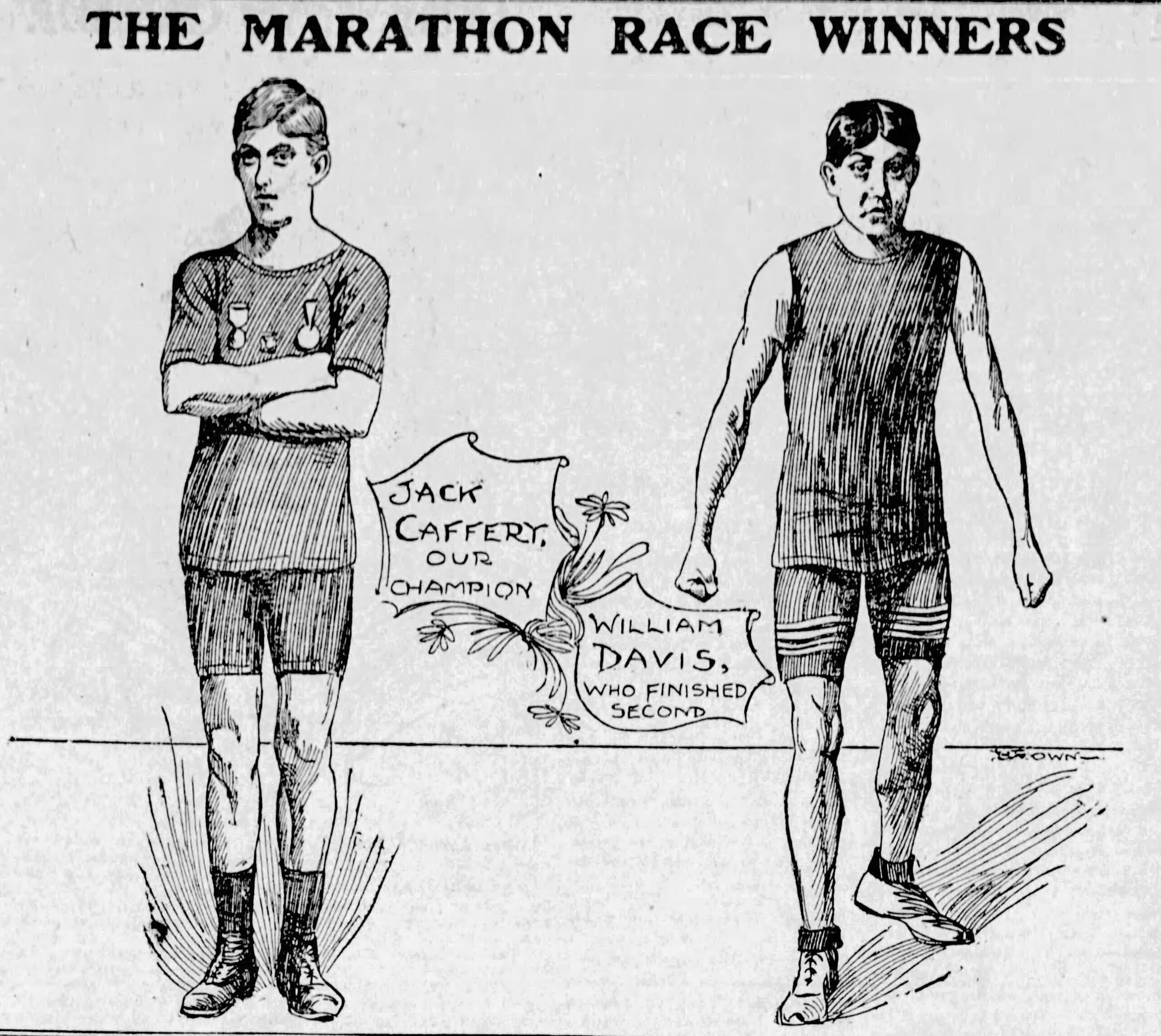
When I was in my feisty youth, I was bursting with motivation; motivation to run a sub-2:30.00 running marathon. Whoopie! Oh, how the motivation flowed. Run in the morning and again in the evening, 8 to 10 miles each turn, up on the balls of my feet, heels barely kissing the ground. Day after day after day, rain, sleet, snow or shine. I never achieved my ultimate goal. And now that I think about it (with no small degree of embarrassment), I wonder, So what? So what if I had run such a time? Then what? Which leads me back to asking . . .
. . .What motivated me to commit myself to such a wacky goal? Fame and fortune? Hardly. I was but one of thousands of obsessive long-distant runners chasing the same goal. More likely it was my response to a boatload of insecurities propelled by winds of self-doubt. How would I compete in the world beyond running? How would I find my way? What I once had thought was my calling—the practice of law—had lost its allure, or rather, had come into better focus, and I feared that it wasn’t my calling at all. In fact, I’d come to hate everything about it—or more precisely, everything I thought it was about. I felt trapped by my misperception of what I truly wanted to do with my life. Worse, what I’d thought I wanted to make of my life was in fact what I thought my family elders wanted me to make of my life. This realization and the self-doubt in its wake turned into my motivation to log 130 miles a week on the balls of my feet.
I could cite all sorts of other less intense examples of motivation in a host of settings; circumstances in which motivation was critical, where it surged, where it faded, and in most cases, I could explain how and why. Thus, from firsthand experience with motivation, I could say quite a lot about it.
But what about motivation among standouts in one field of endeavor or another? What about society-wide motivation?
I’ve long thought that the line between discipline and OCD is exceedingly thin; more frequently blurred. So too is the demarcation between motivation and OCD masquerading as discipline. What motivated my maternal grandfather to be so dedicated to his business? Money? For what purpose? He owned nice things, wore nice clothes, took us to fine restaurants, but he was hardly extravagant. Was he motivated by the need for recognition? He won plenty of plaques and awards and was feted at many a dinner in his honor, but after the flash bulbs flashed, he got right back to business. The praise, the press, the laurels were incidental to what mattered most to him: how to solve the business or industry problem of the day. Or was his motivation as simple as a an exceptional work ethic—one might say, obsession—learned from his father, himself a driven entrepreneur undaunted by hurdle or setback?
What motivated my other grandfather to study the violin and make a living at performing and teaching the instrument? He and my grandmother would join us at symphony concerts at Northrup Auditorium on the main campus of the U of MN, not far from their house, and he never missed a chance to tell me the importance of daily practice, most critically, right after my lesson so as to “apply what I’d just learned and increase the chances it would stick.” But I never heard him say how much he loved Beethoven’s music or that “great music expresses the inexpressible.” That would all come from Dad.
What motivated Grandpa was something much more down to earth; something that could save your life in wartime—or get you invited to a party of the upper crust. The violin had been his livelihood in his 20s; not as a symphony player or soloist on stage but in the grind of the pit orchestras that played at the silent movie houses in downtown Minneapolis. And not playing Mozart or Beethoven, but rough movie scores, popular tunes of the day—largo and andante for the romantic scenes beside a bucolic stream; allegro and prestissimo for the train robbery shoot-out scenes.
Then came the Great War, and Grandpa wound up in a unit hauling munitions from depots to staging areas just behind the front. He took his violin to France, and when his commanding officer heard him play, Grandpa was given a golden ticket out of danger. With bombardments rumbling in the distance over muddy rat-infested trenches, Grandpa made his violin sing for the army brass, as they toasted themselves and tooted their horns safely inside a chateau safely beyond artillery range. The backdrop to his stern lectures to me about practicing was the Vietnam War. “The violin saved my life,” he insisted, “and it could save yours too.” When he discerned my scepticism, he added, “But also, if you practice hard and get good enough, you’ll find yourself being invited to parties.” What motivated Grandpa, however, didn’t work on me. I had to get there on my own, and it was the beauty of the music itself, not the stern lectures of a war veteran.
On a grander scale, I wonder what motivates a 73-year-old man like Xi Jinping. Money and fame? I doubt it. Power? Yes, but what kind of power ultimately? As much as we Americans might identify Xi as an adversary, a dictator, an agent of forces aligned against our national interests, I suspect that he’s motivated far more by the goal of collective power, national power, and not just in the moment or during the next year or two or 20 but in time far beyond his natural life—in keeping with the long-term horizons of Chinese power.
Everyone is motivated by something—fear, love, thirst, pain, lust, hate, hope, humor, hunger, habit, ethics, morality, empathy, aesthetics, sympathy, curiosity, nostalgia, creative impulse, insecurity, money, addiction, generosity, religious belief, irrational thoughts, psychological gratification, physiological satisfaction . . . to name a few. Whatever the source, however, motivation of human action is what turns the world. Without the fire of motivation, the plight of humankind would be pointless and hopeless. Just as we don’t need to know how the engine under the hood drives the car, our strivings don’t depend on what we know of the sources of our motivation. All that matters is that possess it to fuel our strivings.
Subscribe to this blog and receive notifications of new posts by email.
© 2026 by Eric Nilsson
