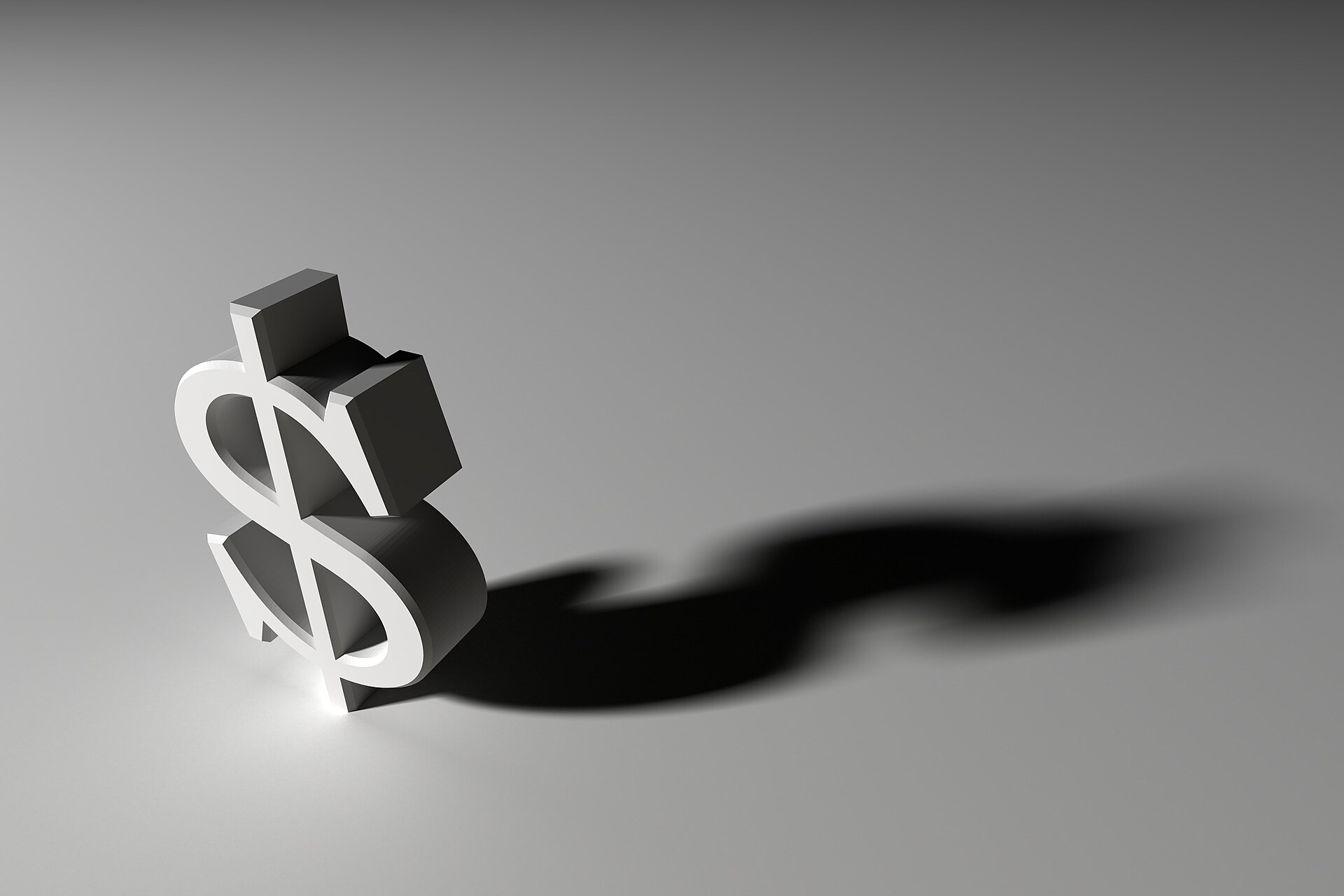
OCTOBER 14, 2026 – Of the American political system, one sordid feature that no longer commands any serious discourse or debate, let alone change, is campaign finance. All we read and hear is that each election cycle brings bigger floods of cash, much of it from the “mega-donor class.” This time around, the high-water mark is the U.S. Senate race in Texas, with a price tag of half a billion bucks. Elon—still just one human being with just one actual vote despite having doubled his wealth from half a trillion dollars to a full trillion since Trump took office—meanwhile, has dumped a whopping $366 million into Congressional mid-term campaigns to help ensure Republican control of House and Senate.
Citizens United, of course, decided in 2010, opened the floodgates, and washed downstream the hope of liberating our politics from the influence of “special [i.e. powerful, concentrated, financial] interests.”
Three years before the landmark Supreme Court case holding that “money”—in unlimited gobs—was a form of speech protected by the First Amendment, Al Gore wrote a book called, Assault on Reason, which warned against the corruptive influence of money in politics. The slish-slosh of cash was most evident in the realm of campaign finance, and most specifically, in funding the high cost of television advertising. Having run four campaigns for the House of Representatives and two Senate campaigns, not to mention his vice presidential and presidential campaigns, Gore knew whereof he spoke. But the book attracted far less attention than had his ambitious campaign—portrayed in the Davis Guggenheim 2006 film, An Inconvenient Truth—to educate the world about anthropogenic global warming and the need to take aggressive action to curtail fossil fuel emissions.
I remember one workday in 2007 when during lunchtime I strolled the few blocks from my office to the downtown Barnes & Noble. Inside, while passing the table featuring “New Arrivals,” I saw Gore’s book. I picked it up and after reading the blurb, started in on the first chapter. The book was riveting. A half hour later, I checked the store’s wall clock. After slamming the book shut and dropping it back down on the table, I bolted back to my office barely in time for a one o’clock call.
But Gore’s thesis stuck with me, and when I resurfaced from the call, my concern returned immediately to the issue of money in politics. I thought about an earlier encounter I’d had with this key problem afflicting American democracy.
That “run-in” had occurred a full 15 years earlier as a participant in the Mondale Fellowship Program at the Hubert H. Humphrey School of Public Affairs at the University of Minnesota. The topic of the fellowship program that year (1992) was quaintly entitled, Has Something Gone Awry with American Politics? [1] [2] The keynote speaker at the opening plenary session was Thomas Eagleton, former U.S. Senator and George McGovern’s running mate for 18 days in the 1972 presidential campaign against Nixon and Agnew.
The statesman from Missouri was an excellent public speaker; not an orator from the tradition of a JFK, an FDR, or a William Jennings Bryan, but nevertheless, an eminently smart, genuine, articulate, and down-to-earth guy who exuded experience in the real world but without having sacrificed altogether, his ideals, conscience, integrity, and dedication to the common good. In retrospect, I thought at the time—and ever more today—what a better country this would’ve been had Eagleton stayed on the ticket and had he and McGovern defeated their opponents.
Yet, what I found most riveting about the speech was Eagleton’s indictment of “money in politics”—the best response to the question posed by the forum’s title. For his attentive audience, he described his personal experience—but stressed that it was the rule, not the exception among his congressional colleagues. His stories culminated with an encounter in which he faced off against . . . himself.
“I was shaving one morning,” he said, “and to do that, of course, I had to look at myself in the mirror. Not in passing. I had to look at myself closely and carefully. As I applied the shaving cream, then my razor, I thought about what I had to do that day—the same thing I’d had to do every single day since the day years before when I’d decided to run for public office. And I said to myself, ‘I just can’t do it. I just can’t do it another day. I just can’t ask another person for a campaign contribution.’
“That was the moment when I realized I had to retire from politics. I had to announce that I would not seek re-election to the United States Senate.”
At this juncture, may I remind the reader that that story was told almost 35 years ago. His “come to Jesus” encounter with himself had occurred six years before that.
What would Thomas Eagleton have thought if he were alive today and beheld the obscene level of spending on political campaigns?
Given the cost of running a successful political campaign in modern America, the role of unfettered money becomes a key trait of our democracy—as does the consequent distortion of that democracy. As long as Citizens United stands, however, we are sailing aboard the ship of state with our hands and feet tied behind the mainmast while Captain Cash directs the course. What’s best for the ship’s owners—who control the captain—is often divergent from what’s best for crew and passengers.
The irony, of course, is that money in politics won’t change, because . . . there’s money in politics. Until this perennial cycle is somehow broken, our body politic will remain captive aboard its own vessel.
Subscribe to this blog and receive notifications of new posts by email.
© 2026 by Eric Nilsson
[1] ! None of us at the forum, least of all, Fritz Mondale, who led and played an active role in the program, could have possibly imagined where the whole ship was headed.
[2] Each of us fellows had to submit a paper at the conclusion of the forum. These were then collected and published in a forum journal. While cleaning out my office after the Covid lockdown, I stumbled across a copy of the journal. I tucked it away in a box holding other miscellaneous books and journals but have yet to unpack the container, which for the time being, is providing additional insulation on the east wall of our garage.
