SEPTEMBER 28, 2026 – This afternoon and early evening I had the privilege of spending more time with our fifth grader granddaughter. Her parents were working, and Grandma is still on your sojourn in the Maritimes, so I was responsible for after-school pick-up and dinner.
Our conversation got off to an interesting start when Illiana informed me that she and a friend had begun planning for their careers teaching English in Korea. They’d actually scoped out air fares, accommodations, and living expenses. “We think the air fare could cost $30,000,” she said.
“I think you can get there for a lot less than that,” I said, “but I’m sure that living in Seoul isn’t cheap.” I was thrilled that Illiana was thinking so expansively. I remember my grand “take-away” from interviewing dozens of college seniors and MBA candidates for the career training program at old Norwest Bank. When the HR department solicited interview volunteers among the bank’s managerial ranks, I happily raised my hand. After interviewing a long roster of applicants, we volunteers then met to present the young people we thought were best suited for the program and the bank. What I enjoyed most about my job was meeting and recruiting; interviewing, then hiring and assimilating the best and the brightest who applied for openings in the division I managed. In that regard my volunteer role in the bank’s training program was a perfect extension of my job.
I remember distinctly that in both roles—hiring folks for my division and recruiting young people for the bank’s training program—I discovered patterns; common characteristics among applicants I considered to be “well above average” across a range of criteria. What stood out was not so much where someone had attended school or their major or what GPA had been achieved, but whether the person had had extended experience living and traveling abroad. I distilled things down to curiosity, expanded perspective, and a willingness to “figure stuff out” and to stretch one’s capabilities.
Here now was our granddaughter thinking expansively and “figure stuff out” already in fifth grade. “Is your friend half Korean too?” I asked.
“No, she’s Irish.”
“And she wants to join you in Korea?”
“I told her it’s an interesting country,” said Illiana, “and a beautiful one too, though they do have wars over there.”
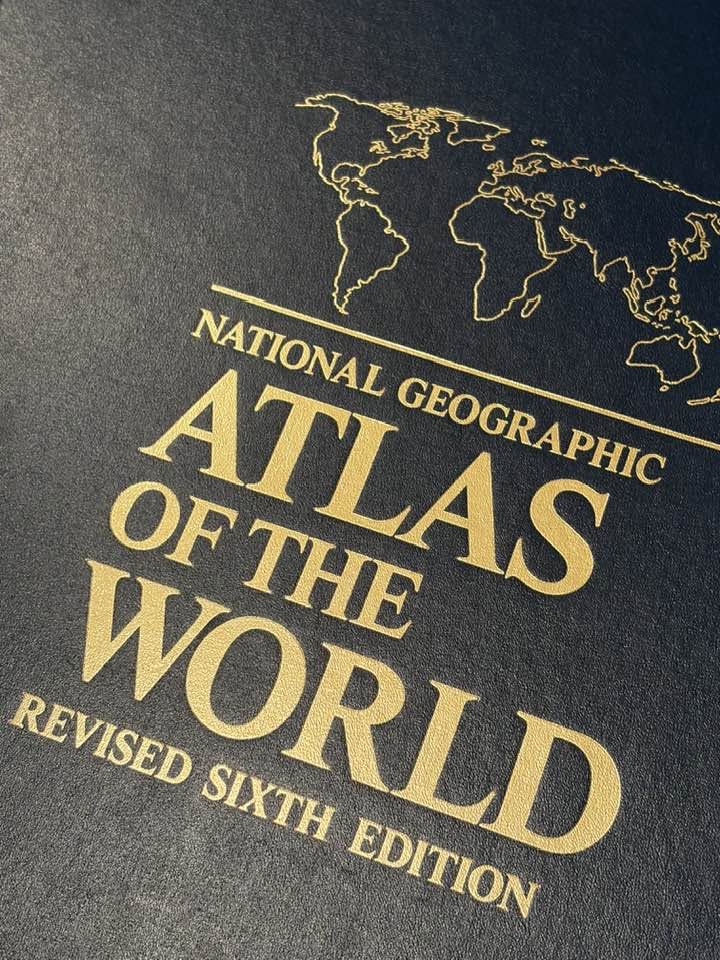
Inevitably, later over dinner out on the porch, we pored over a huge, old-fashioned National Geographic atlas. We propped it up in the chair normally occupied by Grandma and went on a tour of Korea as well as its neighbors.
We also looked up information on how to apply for a position teaching ESL in Korea—the basic requirements; the opportunities; the process for applying. “One critical thing isn’t mentioned here,” I said, as we perused through the website of a principal agency for Anglophones looking to teach in Korea.
“What’s that?”
“The requirement that you Facetime your grandparents on a regular basis.”
Illiana laughed. “Of course I will,” she said, “but we’ll have to figure out the difference in time zones so that I’m not waking you up in the middle of the night.”
Nearly all the teaching positions require a college degree, which means Illiana would be 22 before she’d be eligible. Heaven knows how many times the world will change over the next decade, and indeed, how many times Illiana herself will change her mind. Nevertheless, I was thrilled by her interest in working, living in a place on the opposite side of a world that is as big as it is small. The broader her perspective is now, the greater it will surely be when she reaches adulthood.
I told her so and how excited I was that she was so interested in the world beyond her immediate horizons.
We enjoyed a delightful, free-ranging conversation over the rest of dinner, dessert, and clearing the dishes and tidying up the kitchen. Our talk continued, of course, on the drive to Illiana’s house. I asked about school and received a positive report. She likes her teacher, and I reinforced her positive impression by informing Illiana that I’d conducted some “online research” on him and learned that he’d written extensively about how reading is taught—and how he thought it ought to be taught (i.e. returning to true-and-tried methods, after having seen, studied and tried other means). “In other words,” I said, “he’s really studied the science of reading.” I then told Illiana about the Times article I’d read today in which a group of experts—educators and researchers—had dug deep to determine how to improve the academic performance of American students. “Science of reading” was among the more effective and less costly of the many ideas under consideration.
Illiana’s response got down to brass tacks. “I think a lot of people are lazy,” she said. “They don’t think you have to work hard. And when things do get hard, they quit too easily. It’s that way with learning. Something might not come easily to you, but then you have to work at it. A lot of things are hard. Life is hard, and you have to accept that.”
A few short years ago, Illiana herself would get frustrated with learning new things. Beth and I used to worry about Illiana’s limited patience. Today’s car-ride conversation was striking evidence that the fifth grader is on a whole new set of tracks. To reinforce her positive new school year, I told her that fifth grade was my favorite grade; my fifth grade teacher, my favorite throughout elementary and even middle school. “It was the year where my learning really took off,” I said, “and it sounds as if yours is too.”
“Yeah, I think so,” she said.
As I drove home, I reveled in the honor and privilege of being the kid’s grandparent. There are many more kids like her throughout America, and in that fact we must invest our hope and faith in the future.
Subscribe to this blog and received notifications of new posts by email.
© 2026 by Eric Nilsson
