AUGUST 14, 2026 – (Cont.) In a nutshell . . . my epiphany, as it were, was about the rightwing perception of America as a (formerly) wonderful place that has lost its way, thanks the tentacles of a Communist plot, and the counterbalancing leftwing view that America was never such a wonderful place, given our record of genocide, slavery and economic exploitation, which explains why we’ve gone so far off the rails. In the narratives of each end of the political spectrum, America is in the middle of a crisis of its own making.
But is it really “a crisis,” per se, or is our current condition not simply the natural outcome of our historical evolution?
Back to the thesis of my good friend, Dr. Ravi: American exceptionalism as a function of latitude and longitude. In simple terms, at the end of the 15th century, America was an enormous sandbox ready for exploitation on a first-come, first-serve basis—once the original inhabitants of the sandbox were displaced. Accordingly, the American sandbox had many takers, intent on striking it rich—or at a minimum, improving considerably on the prospects they faced back in the Old Country. What developed out of this sandbox were all sorts of remarkable sandcastles, as well as veritable sandstorms, given the size of the sandbox and qualities of the sand. After 250 years from the Admiral’s first landing, a portion of the sandbox organized itself into a sovereign nation. Another 250 years after its formation, that nation had turned itself into a power well beyond the sandbox.
Or more accurately, the country had evolved into a world power by pure dint of its size, resources and integration with the world economy. America’s natural advantages unleashed natural excesses, as well—and not only in the accumulation of wealth and the distortions created by concentrations of economic power. Ostracized back in Europe because of heretical religious views? No problem! Want to build a cult and lead people off a cliff? It’s a free country! America was big enough and free enough to accommodate all comers. We who don’t reside on the extreme right might scoff at subscribers to the eco-socio-political philosophy of, “Don’t Tread on Me,” but in large part this slogan, borrowed from the Gadsden Flag (1775) reflects the reality of our formative roots. Such roots don’t sustain exclusively a rose garden with a pleasing scent. They feed a political culture that with a few notable exceptions, has been substantially center-right for generations. This is unlikely to change in the near or even intermediate term.
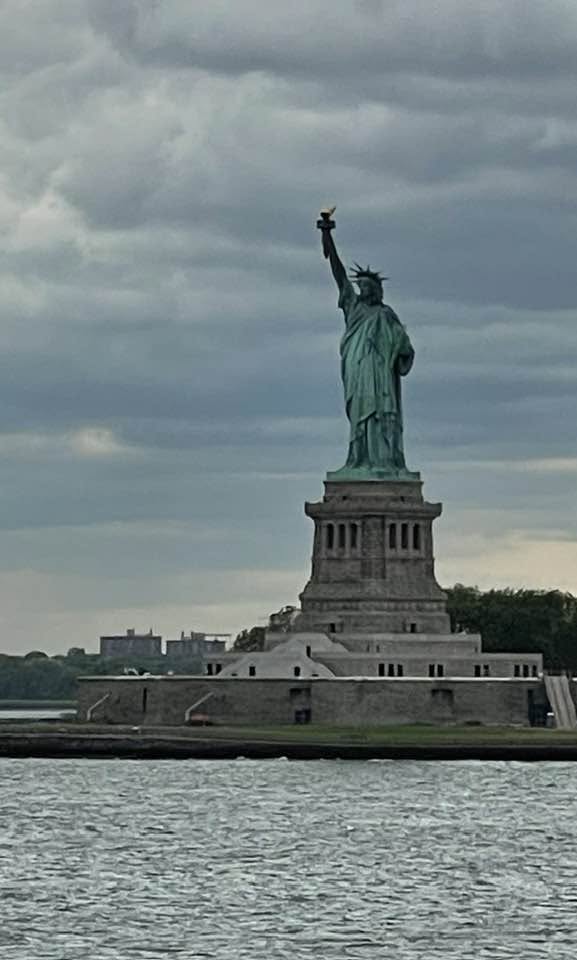
We can debate well into the night the comparative influence of the multiple factors affecting our frustratingly chronic political condition. But at the heart of that condition is our immutable history compounded by our immense size and demographic diversity. We’re a big ship in big seas, and altering course in the middle of our watch is nearly impossible without making big waves that could swamp the vessel if it were to turn too sharply too fast. To pine for non-existent times when the country was good because it was unified is little different from a Staten Island Ferry with two bows wishing it were a sleek racing yacht with a bow and a stern: the desired unreality simply isn’t in the cards. Once the ferry that is at all times steaming both forward and in reverse comes to terms with that fact, its crew and passengers—whether they’re coming or going—can enjoy the view of New York Harbor and snap selfies with the Statue of Liberty in the background.
America can become better than it is, but it can never be something it was never destined to be. This realization was my “epiphanic moment.”
Subscribe to this blog and received notifications of new posts by email.
© 2026 by Eric Nilsson
