SEPTEMBER 3, 2025 – At the lake the other evening we had a clear view of the waxing gibbous moon. Our vantage point was the end of our dock, facing south over the water. The Moon occupied center stage in the darkening sky, and we watched in awe its brilliant performance. Of course, we’d attended many prior shows, but each is a reminder of our neighbor’s cosmic uniqueness, at least from humankind’s perspective: It’s the only heavenly orb whose defining features—besides illumination—we can see and contemplate with unaided eyes. Add a good pair of astronomical binoculars to the mix, and suddenly the Moon becomes a close acquaintance, but even when viewed through the binoculars, the rest of the heavenly bodies beyond the Moon appear as nothing more than points of light—reflected (planets, planetary satellites and comets) or self-generated (stars and meteors in friction with the earth’s atmosphere).
I was transfixed by the Moon while watching its magnificent performance on that recent evening. When my wife asked why the “dark patches” (i.e., the lunar “maria” or “seas”) were that way and the surrounding topography much lighter, I Googled the question and received a plausible answer: the seas are solidified basaltic lava flows, which don’t reflect sunlight as well as the surrounding feldspar-rich terrain does. I felt a little embarrassed by my ignorance. There I was—more than 71 years into “my gig”—and there the Moon has been since time immemorial, so close it’s touchable, and only now am I learning the most basic information about our “close acquaintance.”
As earth’s inseparable companion shifted across the stage, I trained the binoculars on random sections of the sky. In each of these zones, a gazillion stars exploded into a “starzillion.” I then took another long look at the Moon and pondered its proximity—at just 238,900 miles (on average) from earth, nothing more than a “hop, skip, and a jump” from our backyard. Mars, is 212,220,000 million miles away—nearly a thousand times as far as the Moon.
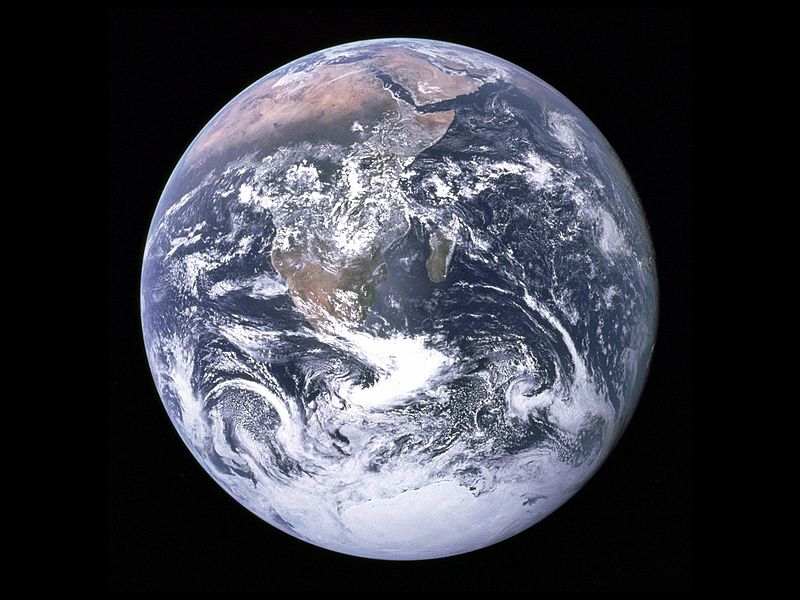
We’ve all seen pictures taken by the Perseverance and Curiosity rovers on Mars. I certainly find them fascinating given what extraordinary feats of engineering and scientific discovery were required to produce those photos. But I’m also mightily impressed by what Mars—and the Moon, and Mercury, and Venus (together with earth, the “rocky planets”)—lack(s) conspicuously: biology even of the most primitive forms, let alone life as it has unfolded here in its infinite evolutionary mutations, wipe-outs, “do-overs,” combinations and permutations.
What I must ask from a broad philosophical perspective is . . . given the lush diversity of earth’s biology, why (on earth!) would we want to colonize such a painfully barren place as Mars? Why should we follow Musk-Man to the Martian equivalent of Death Valley? Why, instead of fixing our home so long neglected are we shooting past the moon, aiming for Mars far beyond? Personally, I very much favor unmanned space exploration, but concurrently we must attend to the dire needs of the mother ship, our much under-appreciated home. This imperative is what I see when I look at the lifeless moon and stars in the big black sky over our neck of the Northwoods.
Subscribe to this blog and receive notifications of new posts by email.
© 2025 by Eric Nilsson
