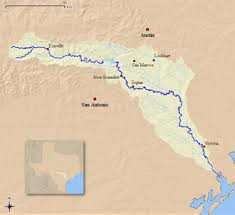
JULY 7, 2025 – The flash flood disaster in Texas is so horrific, it’s got to trigger a flicker of empathy in the heart of even the most extreme sociopath. I can’t imagine being a parent, grandparent or other close loved one of a camper who perished, not to mention of any of the many other victims. My heart goes out to those in grief, and my sympathy would be no less if I knew the party affiliation of the aggrieved.
From what I’ve read (I’ve heard nothing, because I generally don’t watch TV or listen to radio news or podcasts), argument has arisen as to whether the “NWS did its job,” and if not, whether the deficiencies were directly or indirectly caused by DOGE cuts to NOAA (and NWS). At this juncture, I doubt there’s a definitive answer. The situation is reminiscent of what occurs immediately following a commercial plane crash. A newscaster will say, “People on the ground reported a large explosion followed by flames coming out the engine,” or we’re told that “visibility at the time of the crash was down to less than a mile” or “CNN is reporting that the captain had serious financial problems and was going through a terrible divorce,” suggesting pilot error caused the crash. But until the NTSB has done its meticulous job of combing through the wreckage, examining the data from the black box and piecing together the entire sequence that led to the plane going down, speculation is just that—speculation. Likewise, I suspect, of the catastrophe in Texas.
We can hope that a properly thorough and objective investigation of the catastrophe in Texas will be undertaken in due course and in the cool light of day.
Nevertheless, it’s not premature to zoom in on the two principal object lessons of the horrible tragedy—irrespective of the conclusions of any objective, non-partisan investigation.
The first lesson is that the extreme weather event that cause the flooding is part of an exponentially growing body of scientific evidence that we continue to ignore, discount, deny, or disregard at our collective and individual peril. That evidence, of course, is that anthropogenic climate change is real and accelerating and has already cost us dearly in property, treasure, and most critically, lives. If we don’t start treating the evidence as a four-alarm emergency rather than another call to prayer (see guns in America), the cost trajectory—again, in lives and money—will skyrocket.
The second lesson of the disaster in Texas is that even if the DOGE cuts had no appreciable effect on the outcome, the inescapable caveat MUST be, “What would we do without NOAA, without the NWS?” Think ahead to the next flash flood, the next hurricane, the next tornado, the next killer heat wave, the next round of wildfires, the next blizzard, the next ice storm. As extreme weather increases in intensity and frequency; as people continue to occupy and even gravitate toward known high risk areas, the need for accurate forecasting and early warning systems will expand as well. That need can be addressed only with greater resources—satellites, surveillance aircraft, software and hardware upgrades, and, of course, personnel.
But what’s happened since January 20? A drug addict billionaire 500 times over with absolutely no understanding of what most government agencies do or why they were created and no knowledge of how they function, was handed a chain saw and told, “Go cut government down to size.” And not a single Republican in Congress stood up to say, “Wait a minute. What’s the process, what are the parameters, what are the priorities, and just how is ‘cutting government down to size’ going to work?”
And don’t tell me “It was about time to slim down bloated government,” until you’ve demonstrated a thorough knowledge and understanding of how each agency works; why it was created in the first place, what constituency it serves, and what are the consequences of amputation without a torniquet vs. switching to a low sodium diet. Likewise, don’t’ tell me, “We face a deficit crisis, and it’s a case of bail like hell before the ship sinks”—at least not without showing me a robust analysis of how saving a billion bucks in any given context isn’t going to result in two billion bucks of unanticipated costs in another corner. (Example: decimating resources for the IRS (purported savings) but at the cost of fewer tax audits and corresponding decline in revenues.) Moreover, of course, in passing the BBB, the Republicans recently revealed their collective hand: they’re not really concerned about the deficit after all. They and the people who fund their campaigns are all about making and keeping more money.
Texas is a harbinger of what’s to come, even if it turns out that the DOGE cuts bear no direct nexus to this tragedy. Without reversing course after the indiscriminate slash and burn approach to “cutting government down to size,” the question is not “if” but “when” the next extreme weather strikes and people die because NOAA and NWS have been robbed of the resources necessary to forecast and warn.
Subscribe to this blog and receive notifications of new posts by email.
© 2025 by Eric Nilsson
