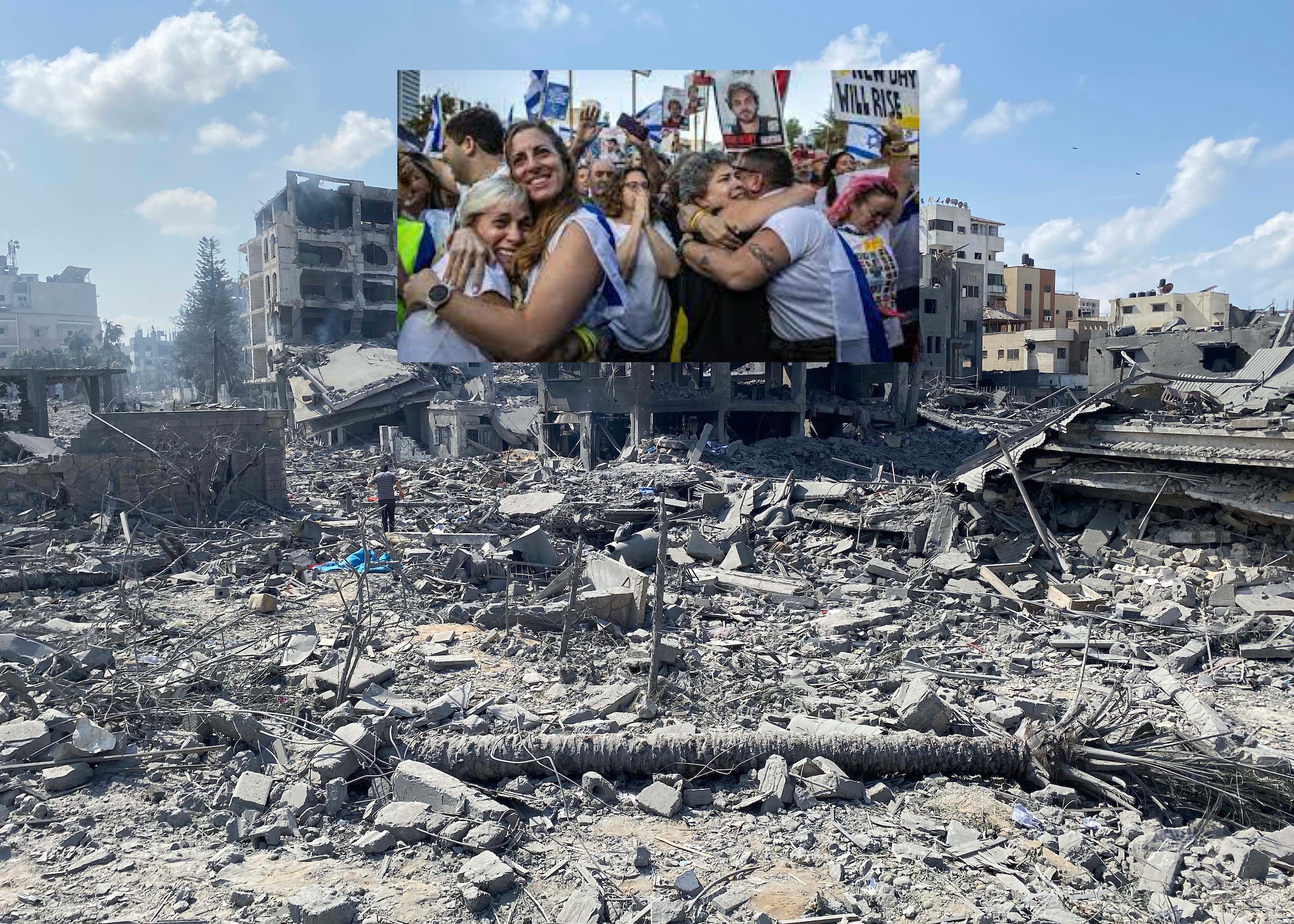
OCTOBER 13, 2025 – Today on the evening news, I watched the emotional reunion of Israeli hostages with their loved ones. No one with a mother, a father, a brother, a sister, a spouse, or any other loved one and who isn’t devoid of all emotion would not be moved by the images.
As I took in this historic event, I experienced vicariously, the supreme joy of the families, but I also felt a mix of negative reactions: anger, outrage, sadness, disappointment, despair. Over what? Humanity’s inhumanity to humanity, manifest in the Hamas attack on Israel on October 7, 2023 and the subsequent destruction of Gaza. What is it about us humans?
And I’m omitting, of course, savagery in the Middle East since Cain and Abel, not to mention violence in the rest of the world since the beginning of time.
To put all in perspective, however, just today, in Michael Wood’s door-stopper-length book, The Story of China: The Epic History of a World Power from the Middle Kingdom to Mao and the China Dream, I read about the Zhou defeat of the Shang (on January 15, 1045 B.C.E.) at Muye north of Zhengzhou in northeast China. After defeating the bloody tyrant of the Shang—overlord of the Zhou—the victors engaged in blood-letting against the defeated that was off the horror scale. But it was but one small example of cataclysmic destruction, swallowed by the gaping maw of time. Turn the pages of history and you find “humanity’s inhumanity to humanity” in every chapter and subchapter. Our self-destructive nature is a bloody constant.
Which, I realized as I watched the news, is why we react with such unparalleled joy when after two years of the worst possible news, the narrative suddenly flips to the best news possible. This sequence is just one of the many paradoxes that characterize the human condition.
Enormous challenges await the world in the aftermath of this latest chapter in our story. How will 2.2 million Gazans return to anything resembling normalcy? How will the loved ones of the victims of the Hamas attack—and the deceased hostages—and 67,000 dead Gazans move on with their lives? How many young Gazans whose lives have been shattered be kept away from the clutches of extremism and future cycles of violence? Who will govern Gaza? How can the ceasefire be used as a diplomatic springboard for reordering relationships in the Middle East toward a more peaceful and prosperous future for all? Who will lead these efforts?
The break in violence happened under Trump’s watch and with his active involvement. President Biden commended Trump for his efforts. So did Hillary Clinton. These noble responses invite our joinder. But once the celebratory lights and music fade, will the self-anointed King of the Deal step out of character, don a leader’s mantle and command long-term diplomatic strategy? Unlikely. As to Netanyahu, shame should cause him to resign, but he is shameless.
Meanwhile, I’m stuck on “humanity’s inhumanity to humanity.” How do we evolve beyond it? It’s the wrong question. We can’t and we won’t eradicate this character flaw from our species. What we can and should do, however, is certainly within our individual and collective capacity: embrace and advance our humanity toward humanity. If the world is home to inhumanity, it’s also replete with examples of humanitarian efforts to alleviate suffering and privation. To those works we must dedicate ourselves continually, leading now with the rebuilding of Gaza and the long-term work of writing a new and promising chapter of peace, justice and prosperity for all people of the Middle East. This should be front and center in our nation’s foreign policy, Democrat or Republican.
Subscribe to this blog and receive notifications of new posts by email.
© 2025 by Eric Nilsson
