JULY 29, 2025 – Today while waiting for an appointment, I was fully engaged in my principal distraction of late[1]—reading a 600-page biography of Mao Zedong, master of China from 1949 until his not-a-day-too-soon-death in 1976. When a younger person asked what I was reading, I held up the cover, which bears Mao’s portrait—and his name in large, all-caps, as in M*A*O.
“Hmm,” the woman grunted. “That leader of North Korea?”
“Mmmm, not exactly,” I said. “For 27 years Mao was the head of Red China.”
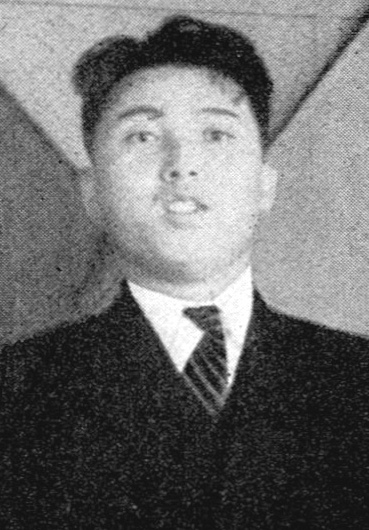
“Oh yeah. But they all look the same. You can’t tell one from another.” [Editorial note: as a joke the featured image of this post is not from the book cover. And it’s not of a youthful Mao. It’s a picture of Kim Il Sung, founder of the Kim Dynasty in North Korea.]
I knew she was referring to the fact that to her—and to many other Americans—all Asians “look alike.”
My initial reaction was shock and dismay. But my readers are likely to be no less shocked and dismayed when I disclose that I gave her “Oh yeah” a passing history grade. (The rest of her response was a “do over.”) Call the history pass “grade inflation,” but this person, I know, is no dummy. She’s rather well informed—way above average, I’d say—about current events, and she’s otherwise very sharp. Her ability to size people up is way up the scale. So in a way, I guess, these circumstances reflect something beyond this person’s disturbing knowledge gap about one of the most powerful monsters of the 20th century; arguably, of all time, based purely on the magnitude of human deaths and suffering.
A while later, as I left the venue and hiked back to my car in the blazing hot sun, I felt a strange level of worry. I knew that this woman had plenty of American company when it came to knowing much of anything about Chairman Mao. Assuming the validity of that presumption, how concerned should we be about our ignorance?
I tried to put this into perspective. In the first place, I’m a history nerd; she isn’t, nor are the overwhelming majority of Americans. Second, my generation grew up in the 50s and 60s. Our fathers had fought in the greatest world conflagration of all time. Our grandfathers had fought in the stupidest world conflagration of all time. We knew about World War I and World War II from the people we knew best. Even kids with the least amount of academic aptitude had heard of the Kaiser, Hitler and Hirohito, and that they were the bad guys. I know this from the “war games” we used to play in the neighborhood when I was in second and third grade.
But those tyrants we knew were bad weren’t out of ancient history. They were of our grandparents’ generation, and the Führer and the Emperor, at least, maxed out their evil when our parents were in their early 20s. For me, second grade started less than 20 years after the bombing of Pearl Harbor. By contrast, Mao Zedong died in 1976—nearly a half century ago—which is now bordering on ancient times, especially when we consider how fast the world has grown and turned since then. The woman who said “Oh yeah,” was barely a toddler—if that—in 1976.
In my mind, I cut her more slack. I’d judged her by her off-the-cuff reaction to my book cover. Chances are that somewhere in the recesses of her education, she’d learned a few things about Mao and would recognize a photo of him when he was substantially older than he was portrayed in the cover art of the book. I chilled further when I suggested to myself that there was doubtless a whole lot of knowledge that “Oh Yeah” had in areas where I was terribly ignorant.
On the way home, I considered further my knee-jerk reaction to the woman’s initial display of ignorance. Specifically, I thought about the good Professor Theofanis Stavrou, my academic hero, who knows more about Russian history and literature than 100 times my entire body of (unrecallable, as well as recallable) knowledge and understanding of the world. He was never judgmental of us students who would never possess the capacity to acquire, hold, synthesize and fully understand more than a smidgeon of what he in his +70-year work as an academician. Rather, he was patient and encouraging.
That, I thought as I pulled into the driveway, was the bottom line that should be drawn from the morning’s encounter.
Subscribe to this blog and receive notifications of new posts by email.
© 2025 by Eric Nilsson
[1] Apart from getting my health restored; with fingers crossed, I can report some progress.
