JANUARY 21, 2026 – This morning with my daily serving of oatmeal fortified with fruit, nuts, honey and cinnamon, I joined my wife in the living room and watched our esteemed president deliver his anxiously anticipated speech before the Davos World Economic Forum. “Speech” describes it charitably. In the style we have come to expect from this man, he dished up a meandering inarticulate goulash of threats, personal grievances, misstatements of fact, megalomania, and disjointed perceptions of the world order. As the president of the largest economic and military power the world has ever known rambled around in circles way outside the lines in his puerile coloring book, my wife blurted out, “I wish we could see the faces of the people in his audience.”
Our own faces were bathed in shock, horror and embarrassment, despite the unhappy fact that for over a decade—yes, decade—we’ve grown well accustomed to Mr. Trump’s crass style, denial of truth, ignorance and self-adulation inflated with hot-air superlatives. We’ve known all along that he puts less thought into substantive policy than it takes to crack an egg and order a million red caps from China.
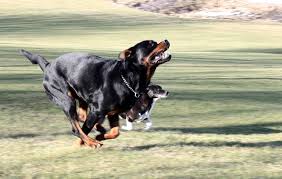
The man is nothing more than an old untrainable classless attack dog romping in a yard well-fertilized with its own excrement. The dog lot has no fencing of any kind—visible or invisible. There’s nothing new about any of this. Half the neighborhood around this state of affairs has been unable to put an end to it. The other half has been unwilling to do so. Eventually the dog will go lame, then die or just up and die, but in either case, the neighborhood will be left with the unsightly lot and groundwater contamination. What then, when the clean-up bill comes due?
Complicit, of course, and therefore responsible, are the dog’s owners—or to be more precise, the party-house owners who allowed the animal onto their property, then encouraged the mad dog to run wild and roughshod over all norms of order and civility that had prevailed before the dog was unleashed and the fences compromised. Those who are complicit must be held to account for their sufferance, capitulation or active support. For justice, not vengeance, the honor and power of the enablers must be forever forfeited. Even then, the debt they’ve accrued to their neighborhood and community can never be fully repaid because the obligation can never be fully assessed.
But what to do with the neighbors who voted to do nothing, or worse, to give unbridled encouragement to the barking, drooling, untrained, uncouth pit-bull? Are the neighbors who protested endlessly against the dog supposed to “make nice” and let by-gones be by-gones? That might be the “Christian thing” to do—as well as the most pragmatic and convenient course—but if we proceed without national self-examination, we ignore the central lesson of American Civics 101: the essential ingredient of a vibrant democracy is national self-criticism, which, in turn, is the sine qua non of national self-improvement. If we simply “dump Trump,” denigrate his supporters and resume our siloed lives, we’ll be condemned to an eventual redux of populism in one of its many myopic and destructive forms.
To reach a more enlightened step in our nation’s evolution—and perhaps, even, to avoid calamitous disintegration—we need to convene a national mediation session with the same determination that we dedicated to landing on the moon, or . . . to surviving the Great Depression and winning the wars against Nazi Germany and Imperial Japan.[1] Effective mediation, however, requires that we first acknowledge our common interests.
Meanwhile . . . lest we forget, Trump’s erratic performance today in front of the world’s leaders was more than disturbing evidence of the threat he poses to global stability; it was outright proof of such . . . beyond any doubt, reasonable or otherwise.
Subscribe to this blog and receive notifications of new posts by email.
© 2026 by Eric Nilsson
[1] Those of us who survived the Covid-19 pandemic did so in spite of ourselves. Our lack of national consensus was deeply disturbing. The “enemy” in that case was a virus that took no prisoners, yet we wound up battling ourselves as much as fought the disease itself, largely because by the time the virus invaded, any notion of the common good had long been in decline.
