DECEMBER 22, 2025 – (Cont.) While pulling music from my music cabinet in search of “candidates” for the 50th reunion memorial service, I found many of the pieces I’d performed in the “Fiddler UNDER the Roof” concerts—lots of Bach; the Beethoven “Romances”; “Havanaise” and “Introduction and Rondo Capriccioso” by Camille Saint-Saëns; “Praeludium and Allegro” by Fritz Kreisler, a violin transcription of Frédéric Chopin’s Nocturne in C minor for piano; pieces by Scott Joplin, also transcribed for violin; pieces by Dvorak; the first movement of Éduoard Lalo’s “Symphonie Espagnole”; the first movement of the “Mendelssohn Violin Concerto”; and pieces that might work best for the reunion memorial service: Edward Elgar’s “Salut d’Amour”; “Schindler’s List” by John Williams; “Meditation” from Thaïs by Jules Massenet; and the “Canzonetta” (second movement) from the Tchaikovsky Violin Concerto.
But something slipped out from the collection of sheet music stashed on the third shelf down inside the cabinet: a ragged copy of a script I’d written for one of those “Fiddler UNDER the Roof” house concerts. Dear Provost Scattersneed, it started. I remembered writing it—a letter—and later reading it aloud (theatrically) to my audiences, but I’d forgotten the exact context.
Here’s your ticket for induction into the hall of academic fame for turning O’Reilly Smart College into the most sought-after institution of higher living—I mean learning—in the Western World . . . well at least in the world west of New Hampshire and east of Lake Champlain.
Recently, I bumped into Felix Mendelssohn, famous composer of the Romantic Era.
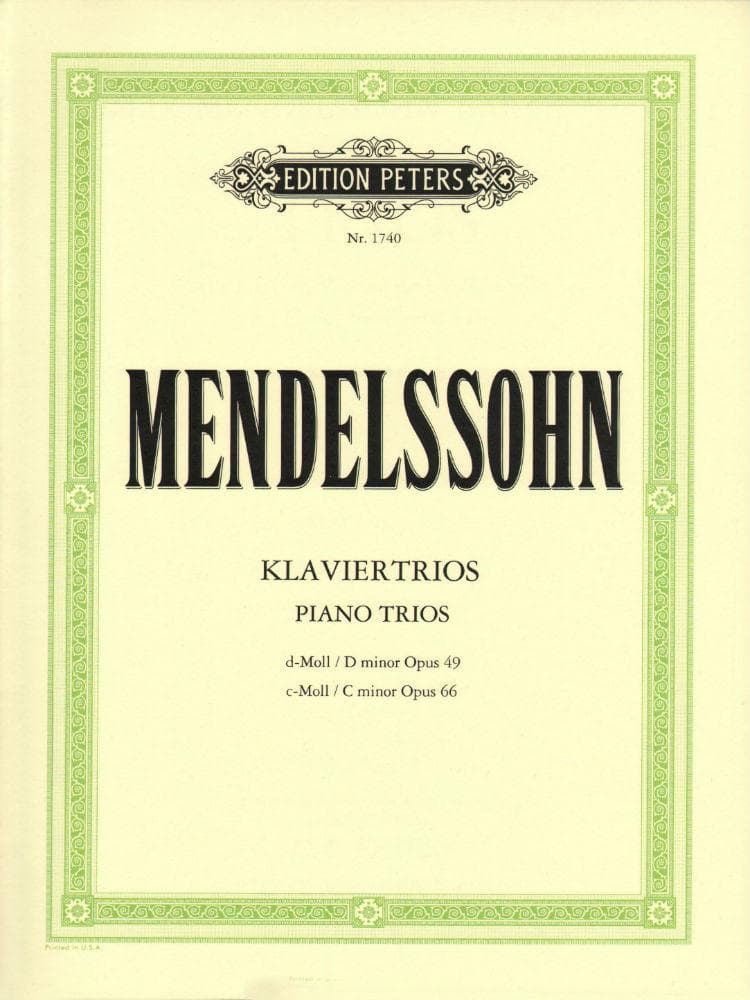
Mendelssohn! The Mozart of Romanticism! Upon reaching that name, I remembered. I’d used the “letter” to introduce our audiences to the master behind the second movement of the composer’s divinely beautiful Trio in d minor for piano, violin and cello—a piece I’d studied and performed my junior year at Interlochen and some 43 years later was dusting off for “Fiddler UNDER the Roof.”
In preparation for the latter performance, I’d read R. Larry Todd’s acclaimed 683-page definitive biography of the great composer[1] and had been fascinated not only by Felix Mendelssohn but by all the other geniuses of his family—most notably, his great aunt, Sara Itzig Levy with her connections to Bach; Felix’s grandfather Moses—the great philosopher and founder of Reform Judaism; Felix’s father, Abraham, and Abraham’s brother and business partner, Joseph, successful bankers who dedicated their wealth to the arts; Felix’s beloved sister Fanny, whose musical talent rivaled her brother’s. The family history was rich in so many ways, I felt compelled to “share the wealth” with my audiences. Avoiding a dry academic approach, I used a whacky academic approach: I imagined soliciting the provost at a small imaginary liberal arts college in Vermont about establishing a multi-disciplinary department inspired by the extraordinary lives of the Mendelssohn polymaths. After explaining that I’d run into Felix Mendelssohn, the “letter” to the imaginary provost of the imaginary college continued . . .
More accurately, he bumped into me when a bunch of his music fell off a shelf of the Minneapolis Public Library[2] and struck me in the head. Surely you’re familiar with his “Hark! The Herald Angels Sing,” but maybe less so with his magical “Overture to a Midsummer Night’s Dream,” his stirring “Italian, Reformation, and Scottish Symphonies,” his signature piece, “Violin Concerto in E Minor,” his prodigious output of chamber music, his extraordinary piano concertos and “Elija,” his hear-this-and-you-go-straight-to-heaven oratorio—much of it composed by the time he was college age, all of which by the time he was 38, because that’s when he died. But that’s all background music, so to speak.
Mendelssohn and his whole fam damly sat at the apex of the European artistic and intellectual pyramid of the late 18th and early 19 Centuries. . . . You’re yawning?! . . . Think of it this way: “Brains afire, brains in a basket, Napoleon marching, winter raging, Russia, Prussia, Seven Days War, Hiller, Schiller, cards with Johann Wolfgang von Goethe, art and music to the max.” More awake now? Good!
Okay, back to the bump on my head as I approach 60—miles per hour. Here’s your way to fame in provost land: create a new department called, “One Thing Leads to Another.” Offer courses that integrate everything from math to music, physics to philosophy writing and reading and therefore, thinking; a look at the past to see the future—all with energy more explosive than anything inside the head of a college provost, I mean undergraduate, since the student uprisings of 1848.
I’ll launch with an intro course called, “Moses, Money, Music, and Mendelssohn”—see syllabus attached. Let me put a match to the tinder inside a few undergraduate heads, and together we’ll light their hair on fire. My terms are easy: gas for the old pickup, room and board for my wife and me, and a season pass at Stowe—one’ll do; my wife doesn’t ski. Deal? Bingo!
See you soon on campus to nail down details.
Sincerely,
Me
With a smile, I carefully slipped the “letter” under the cover of the music to the Mendelssohn Trio. If nothing else, rediscovery of the missive reminded me how “One thing leads to another.”
Subscribe to this blog and receive notifications of new posts by email.
© 2025 by Eric Nilsson
[1] Mendelssohn: A Life in Music (2005). A year or two after the book came out, the author was a special guest of the Saint Paul Chamber Orchestra and gave several talks on Mendelssohn. Programming, of course, included works by Mendelssohn, including, his Italian Symphony.
[2] This was nearly true. To my amazement, the MPL houses one of the largest sheet music collections of any library in the country. I found a huge selection of chamber music, including three editions of the Mendelssohn piano trio that I wanted to include on the “Fiddler UNDER the Roof” program that year.
