SEPTEMBER 11, 2025 – I’d like to travel across the country, that is, through the countryside, small towns, medium-size communities, and big cities. I’d like to go up and down the coasts, the Northeast, the Northwest, the Southeast, the Southwest, the Deep South, the Midwest, the West, plus the great outlier states, Alaska and Hawaii. The point of the exercise would be to ask as many people as I could, one, and in most cases, two, questions:
- “Whether you consider yourself right, left or center, do you think the country is in crisis?
“If you answer “No,” thank you for your time, and have a nice day.
“2. If you answered “Yes,” what do we need to do to avert the crisis?”
I imagine “No” would be rarely given in response to the first question. I’d guess that the answers to the second question would cluster around “dump Trump” and “vote Republicans out of office” . . . OR . . . the opposite, as in, “shut down the Dems” and “make sure the Republicans control U.S. House and Senate—and state governor mansions, legislative houses—after the 2026 mid-terms.” In other words, “vote the rascals out” OR “vote our rascals in.”
Another set of answers would revolve around the desire for a theocracy. “The answer is Jesus—along with the Ten Commandments in every school,” some would say. Or, “Peace and love, brother. That’s the answer. Peace and love!”
If you were to pose these questions to me, here’s how I’d respond:
Question No. 1: Yes, the country is in crisis. This is not our first one, of course, but the current crisis is potentially our most dangerous. In the past we’ve faced peat bog fires that gradually moved toward the village until they torched the outer homes. Soon thereafter half the town went up in flames. Here I’m thinking of the Civil War. Now, we face multiple gas lines above and below ground that run right through the town. The lines have many loose connections, and there’s no schedule to address deferred maintenance. Leaks abound. One spark and the whole town could be blown sky high.
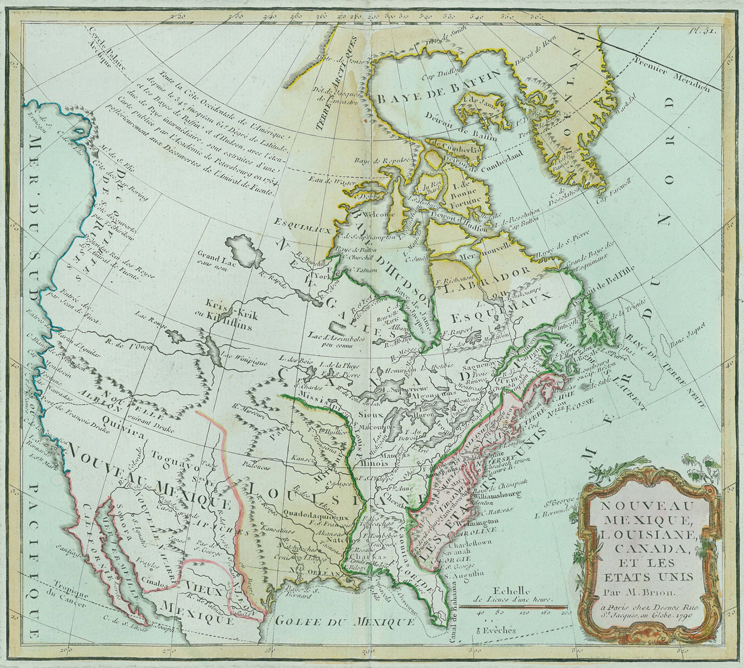
Question No. 2: The crisis can’t be diminished simply by “throwing the rascals” out—or voting a different set of rascals in. Our most fundamental problem is an anachronistic governmental structure, a form put in place when the country’s population was only 3,929,214 (according to the first official census, conducted in 1790), mostly along the Eastern Seaboard and largely agrarian. Amendments to the foundational architecture have been few and far between. Instead of a national organizational built around regional interests, we have a federal system comprising 50 individual states, each with its own three-way governmental structure and separate way of doing things. If you’re an anti-vaxxer living in Florida, good for you. Vaccines are no longer mandated for your kids. But courtesy of airplanes and viruses not observing state boundaries, if you live in a state other than Florida, and you want everyone’s kid to be vaccinated to reduce communicable diseases from spreading, then not so good for you. Welcome to states rights times 50.
Then there’s the Senate—devised as a political compromise to America’s Original Sin—slavery. Under the Constitution, Wyoming, with a population of 587,614 (2024), has the same power to consent to or reject appointments to the Supreme Court as does California, with a population of 3.94 million.
Then there’s the omnipresent problem of money in politics—thanks to the Supreme Court’s interpretation of “person” and “first amendment rights” in the infamous Citizens United case.
Finally, there’s the issue of turnover, policy reversals, and political whiplash. Don’t like the price of eggs? Blame it on the rascals in power, and throw them out—every two years!
In short, we’ve reached a stage in our political evolution wherein we are ungovernable under the existing, ossified framework. This structure aggravates our polarization and precludes the sorts of reforms necessary to address effectively our many serious issues. We blame the political environment, when the crux of the problem is our governmental structure.
The current crisis isn’t simply the sum of our critical issues but the dysfunctionality of our political process—as a direct result of our flawed governmental structure. Ironically, because our governmental system was designed intentionally to render change difficult, we might well not be able to make the changes necessary to preserve our country.
In all events, keep your hat on and your seatbelt fastened.
Subscribe to this blog and receive notifications of new posts by email.
© 2025 by Eric Nilsson
