JANUARY 18, 2026 – Yesterday evening, we joined our friends Ann and Ravi at nearby Bolé, a gourmet Ethiopian restaurant. Parking was so bad that after letting Beth off at the entrance, I had to drive nearly halfway home to find a spot. The walk from the car back to the restaurant took time, given the danger of ice in the dark.
We’d chosen purposefully among immigrant-owned and managed establishments, many of which have been targeted by ICE goons in Minnesota since late December. We were delighted to find the place jammed with patrons. The food was delicious and the hard-working staff delivered plates and platters relished with good cheer. One of the owners was on hand, introducing customers to off-menu delicacies that he deftly arranged at table-side, as if rendering an artistic performance. We told him how much we were enjoying the experience and that he had our whole-hearted support. He knew full well our unstated reference to ICE tactics and responded with genuine appreciation.
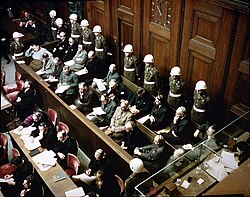
Afterward, we repaired to our house where Ann gave Beth long-awaited instruction on the intricacies of mahjong. Since the considerable brainwork involved was well above our weekend paygrade, the good Dr. Ravi and I slinked into the adjoining room to watch a movie. Our selection was the 1961 film, Judgment at Nuremberg, starring Spencer Tracy, Richard Widmark, Montgomery Cliff, Marlene Dietrich, Burt Lancaster, Werner Klemperer, Judy Garland, and William Shatner and directed by Stanley Kramer. Neither Ravi nor I had seen the movie.
We’d assumed it was about the prosecution of top-echelon Nazis—Göring, Hess, Ribbentrop, Frank, et alia—but the movie featured the war crimes of lesser known operators of the Nazi apparatus: the judiciary. In large part this focus was more revealing—and chilling—than the charges against the higher profile war criminals. As “law movies” go, this one was exceptionally well-written and directed. Eighty percent of the film takes place in the courtroom, but the script never drags, and we forgot that the actors, despite their big screen fame, weren’t real-life characters.
The most remarkable aspect of our viewing experience was the frequency with which lines spoken by the lawyers, witnesses, defendants, and jurists would cause Ravi and me to look at each other spontaneously and with raised eyebrows. We know and talk enough about ICE raids and ambushes, as well as current regime’s broader contempt for the rule of law, at home and abroad, to realize how closely elements of the Nazi regime parallel what’s currently unfolding in our country today.
Given the role of jurists in the fascist order—providing legal cover for abominable acts and outcomes—the defense made three primary arguments:
FIRST – The jurists on trial hadn’t “made the laws”—they were simply applying them. In preservation of an orderly, law-bound society, jurists have a duty to abide by the law, however much they might have disagreed with it. From a society-wide perspective, every viable country adopts a juridical construct which must then be observed by everyone to avoid the inevitable chaos that would ensue if people obeyed only the laws they deem just. The Nazi jurists were simply people trained in the law to dispense justice in accordance with established law and order.
SECOND – Only the “really bad people” (i.e. the SS) knew what was going on in the death camps, and it would be hugely unjust to punish Germans in general for the bad deeds of relatively few. (This theme is explored further in scenes and encounters that the American tribunal jurist, Judge Haywood (Tracy), has with the German couple who serve as his domestic staff and with the aristocratic widow (Dietrich) of a high-ranking Wehrmacht general who, we learn, was earlier tried, convicted, and sentenced (and ultimately hanged) by another Nuremberg Allied tribunal.).
THIRD – If the three defendants presently in the dock are to be held guilty for all the death and destruction wreaked by the Nazi regime, then so too should the American industrialists who profited from the war; the Soviets, who accommodated Hitler under the Ribbentrop Pact; and the appeasers, who’d failed to stop Hitler at numerous junctures when preventative resistance would’ve still been possible.
Each of these defenses failed, of course, but—more appropriately, and—they deserve re-examination in the context of what now darkens our country.
FIRST (JURISTS SIMPLY APPLIED THE LAW) – On a superficial level, this argument comports to American jurisprudence, the separation of powers, and the respective Constitutional roles of the legislative and the judicial (legislation is the purview of the legislative branch, subject to consistency with the Constitution as interpreted by the judicial branch (the executive branch, of course, is Constitutionally tasked with carrying out the law)). An American judge, for example, who disagrees with what she deems is an “unjust” law passed by a legislative body, can’t (even in good conscience) ignore the law, unless it is adjudicated as unconstitutional.
No such “unless” existed with respect to the laws of Nazi Germany. Thus, just below the surface, the legal argument advanced by the defense at Nuremberg disintegrates. Any attempt to equate it to American law is void out of the chute. Whereas all acts of the legislature (and executive orders of the executive[1]) under American law must pass muster under the Constitution, there were no limits to laws of the Nazi regime. The most prominent examples of Nazi law going off the rails were the infamous “Nuremberg Laws,” adopted in 1935, which codified the worst sort of bigotry, racism, and inhumanity.
But there’s more to the legal argument—both as it was addressed in the case of the German jurists and as the current regime attempts to twist it in the course of enforcing U.S. immigration law. In Judgment at Nuremberg, a key prosecution witness—an esteemed legal scholar with whom the lead defendant had studied—testified that given the signs, the signals, the clear evidence that the system was sliding into a very deep, dark abyss, it was incumbent on jurists to resign before they became inextricably complicit by giving legitimacy to the unjust laws of an evil and corrupt regime. Though not explicitly stated, this was the main retort to the argument that, “like it or not, the law was the law, and the jurists had ‘no choice’ but to follow it—including sending innocent people to the gallows.”
Does this same retort apply to “unjust” immigration laws here and now in the U.S.—and if so, what are American jurists and prosecutors to do—not only within the bounds of our legal structure but in accordance with the moral imperatives that ensued from the judgment at Nuremberg?
As much as many of us might disagree with the laws themselves and deem them “unjust,” economically ill-advised, and so on, as long as they are constitutional, our action must be legislative, either by pressing for change now by the current Congress, or by a new Congress voted in next November (assuming elections are held and the results respected). Meanwhile, however, we need an “all hands on deck” approach to the unlawful enforcement of immigration law, and short of an overhaul of the entire body of immigration law, we need to pursue interim legislation that curtails the excesses of current enforcement methods.
From what many Minnesotans have witnessed first-hand, much of the ICE operations either violate the law (in broad sweep, the Bill of Rights) or, if strictly “legal,” are so blatantly mean, nasty and cruel, they are a blight on a nation that ought to pride itself in observing a modicum of civility and humanity (e.g. in the ambush, arrest and detention of mothers and children, for crying out loud, not to mention peaceful demonstrators[2]).
SECOND (“I DIDN’T KNOW”): In this age of ubiquitous and instantaneous “information,” no one with a smartphone can hide behind the excuse, “But [because rightwing media are my sole sources of information] I had no idea what ICE [or any other agency of grossly offensive orders or edicts of the Trump Administration] was doing!” What’s happening in Minnesota is “code red,” not only for what more awaits us here in Trump’s War of Vengeance, but what threatens the rest of the nation. Nor can any American citizen claim ignorance or “lack of interest” in Trump’s threatened illegal seizure of Greenland or his illegal take-out of Maduro (whether the head of Venezuela is an angel or a devil or something in between is irrelevant to the analysis—unless you subscribe to the law of the jungle as espoused by Stephen Miller). However much we’d rather . . . go wash the car, watch football, watch our grandkids, scroll through inane memes on social media, eat popcorn while binge-watching a Netflix series, otherwise enjoy life, or, alternatively, worry about retaining our physical, mental, and financial health . . . than we’d care to know about Stephen Miller’s latest scheme, we must now be and remain on “code red,” if we are to save ourselves . . . from ourselves.
THIRD (“EVERYONE’S RESPONSIBLE”): We cannot avoid responsibility by the device argued by the defense at Nuremberg, namely, that universal abstract guilt excuses the actions and omissions of the “supporting cast,” whose proximity to the primary actors made the rest of the cast complicit enablers, who should be held accountable. Here I think mainly of Republican House and Senate members. In the name of party loyalty and under the influence of a personality cult, Republicans have betrayed their constitutional duty to uphold and defend their branch of government against dangerous overreach by the executive and shocking weakness of the judiciary. Each of them (in the Senate, those standing for re-election) should be brought to electoral justice next November.
I urge my readers to watch Judgment at Nuremberg (free on Prime) and as you do, to ponder the lessons to be learned and applied in our own dangerous times.
Subscribe to this blog and receive notifications of new posts by email.
© 2026 by Eric Nilsson
[1] Executive orders require legal authority granted by statute or regulation promulgated pursuant to statutory authority, which in turn, must be constitutional.
[2] In this regard, we’re entitled to celebrate last week’s decision by Federal District Court (MN) Judge Menendez, which bars ICE from messing with peaceful protesters.
