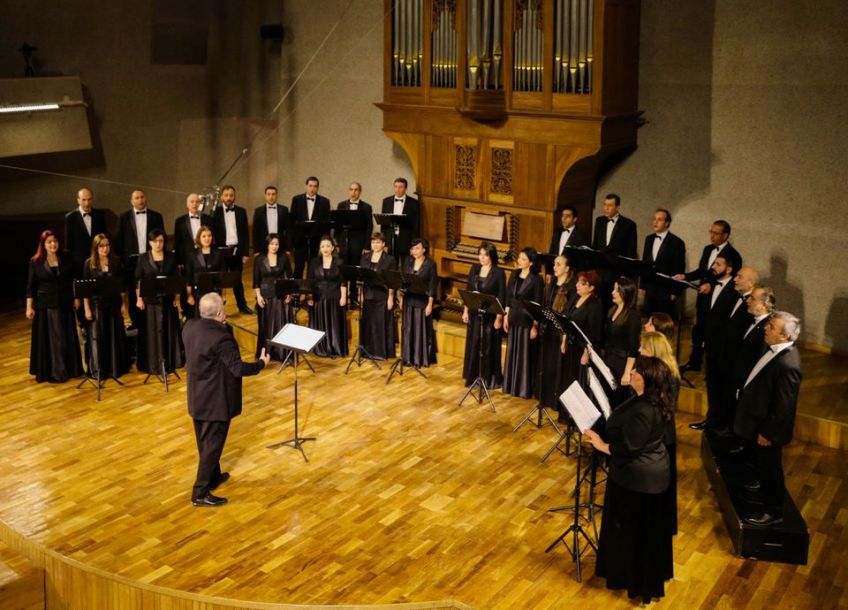
NOVEMBER 16, 2025 – This morning today’s blog post subject occurred to me, all ready to roll: “Lost and Found.” Keen on efficiency, I figured I’d get an early start on it while waiting for the mercury to edge its way to 35F before I plunged back into my weekend outdoor project (see yesterday’s post, “Candyland”). To accompany my writing effort, I searched on YouTube for Schubert’s Mass in G. Though I’m not religious, on Sunday mornings I like to listen to great “sacred music,” with a preference for the works of Mozart and especially Schubert and especially when I’m at the cabin. When I’m up here, Dad’s presence is always felt, since Björnholm was as much his Shangri-La as it is mine. And to boot, Schubert was his favorite composer. During a weekend visit with my parents back when I was pulled in multiple directions at once—work, family, civic activities, compulsive running and skiing—Dad handed me a cassette tape of a few of his all-time favorite pieces. Among them was the Credo from Schubert’s Mass in G. It took a week or more before I got around to listening to it. I instantly recalled the Credo—Dad used to play a recording of it (the Robert Shaw Choir and Atlanta Symphony) regularly when I was a kid. It lasts only three and a half minutes, but its effect endures indefinitely.
Anyway, my YouTube search this morning pulled up my “go to” version of it rendered by the National Chamber Choir of Armenia in collaboration with the National Chamber Orchestra of Armenia. The musicians and recording quality are of world standards, but what fascinates me, or to reveal my provinciality, what astounds me, is the Armenian part. I mean, when I think Great Western Classical Music, I think of places such as Vienna, London, Paris, Berlin, Leipzig, Prague, Budapest, Warsaw, St. Petersburg, Rome, Milano, and Finland (yes, Finland). I do not think of Armenia, a country of the South Caucasus region of western Asia, battered by history—bordered as it is by Turkey, Georgia, Azerbaijan, and Iran and for 70 years a Soviet Socialist Republic—with a total population of only 3 million—slightly more than a mere half of the population of my home state of Minnesota.[1]
The National Chamber Choir and the National Chamber Orchestra are home grown, most of the musicians having attended the Komitas Conservatory in the nation’s capital of Yerevan, founded in 1921. The school’s alumni include an impressive list of world class musicians. The three Armenian figures best known to me are the composer Aram Khachaturian, the violin pedagogue, Ivan Galamian[2]—whose students included Itzhak Perlman and . . . drum, roll . . . er . . . trill on the violin, preferably thirds or sixths . . . my sister Elsa, and a friend and classmate of Elsa’s at Interlochen Arts Academy, the now world renowned violist, Kim Kashkashian.[3]
That this small land in a hard-scrabbled part of the world has produced such grand music is a testament to what can best be cast as “exceptionalism” of some sort. But how and why, I’d like to know; what is it about the country’s place, history, and traditions, I wonder, that melded to bring such gifts to the world of Western Classical music?
Subscribe to this blog and receive notifications of new posts by email.
© 2025 by Eric Nilsson
[1] If diasporic Armenians are included, the number of Armenians in the entire world increases by another 7 million to 11 million (mostly in France, Russia, and the United States) for a total of 10 million to 14 million—slightly more than Sweden’s “at home” population of 10.5 million.
[2] Galamian was born in Tabriz, Iran to Armenian parents, who then moved to Moscow. Galamian later emigrated to France and in 1937, he came to the United States, which would become his permanent home, and where he taught generations of violinists at Juilliard and the Curtis Institute of Music.
[3] Born in Detroit, Ms. Kashkashian’s parents were Armenian. Her father was a baritone and loved to sing Armenian folk songs.
